The Best Temperature To Cook Chestnuts In The Oven
The best temperature to cook chestnuts in the oven is between 425°F and 450°F for a crispy, golden finish. Roasting chestnuts at the right heat ensures they turn tender inside with a rich, nutty flavor. Follow a few simple steps, and you will have perfect oven-roasted chestnuts in under 30 minutes.
There is something truly special about the best temperature to cook chestnuts in the oven. Whether you are preparing them for a holiday feast or a cozy winter snack, getting the temperature right makes all the difference. Roasted chestnuts bring a warm, nutty flavor that pairs perfectly with so many dishes.
Many people struggle with chestnut cooking because they do not pay attention to the heat. Too low, and they stay hard and bland. Too high, and they burn on the outside while staying raw inside. The best temperature to cook chestnuts in the oven hits a sweet spot that gives you a crispy shell and a creamy, tender interior every single time.
In this guide, we will walk you through everything you need to know. From choosing the right chestnuts to the exact oven settings, we have you covered. You will learn how to prepare them, roast them, and serve them like a pro. Let us get started.
Key Takeaways
- Optimal Temperature: Roast chestnuts at 425°F to 450°F for the best texture and flavor.
- Score Before Roasting: Always cut an X on the flat side of each chestnut to prevent bursting.
- Timing Matters: Roast for 20 to 30 minutes depending on your oven and chestnut size.
- Peel While Warm: Remove the shell and skin while the chestnuts are still hot for easy peeling.
- Avoid Common Mistakes: Do not skip soaking, scoring, or using too high a temperature.
- Store Properly: Keep roasted chestnuts in an airtight container for up to a week.
- Versatile Ingredient: Use roasted chestnuts in stuffings, desserts, salads, and snacks.
📑 Table of Contents
- The Ideal Oven Temperature for Chestnuts
- How to Prepare Chestnuts for Oven Cooking
- Step-by-Step Guide to Roasting Chestnuts
- How Long to Cook Chestnuts in the Oven
- Common Mistakes to Avoid When Cooking Chestnuts
- Tips for Perfect Chestnuts Every Time
- The Science Behind Roasting Chestnuts
- Chestnut Varieties and How They Affect Roasting
- Frequently Asked Questions
- Conclusion
The Ideal Oven Temperature for Chestnuts
Getting the oven temperature right is the single most important step. The best temperature to cook chestnuts in the oven falls within a specific range that balances crispiness with tenderness. Most experts agree on a range between 425°F and 450°F.
Why Temperature Matters for Chestnuts
Chestnuts have a unique texture compared to other nuts. They contain a lot of moisture and starch. When you apply the right heat, that moisture steams inside the shell. This creates a soft, creamy texture that is the hallmark of a perfectly roasted chestnut.
If the oven is too cool, the moisture does not escape properly. The chestnuts end up chewy and undercooked. If the heat is too high, the outside burns before the inside has a chance to cook through. The best temperature to cook chestnuts in the oven allows for even heat distribution. This ensures every nut roasts uniformly from shell to center.
Recommended Temperature Settings
Here is a quick look at the most commonly used oven temperatures for chestnuts:
- 425°F: A moderate heat that roasts chestnuts evenly. Great for beginners. Results in a golden brown shell with a creamy interior.
- 450°F: A slightly higher heat that speeds up the process. Best for experienced cooks who want a crispier shell.
- 400°F: A lower option that works well for larger batches. Takes a bit longer but reduces the risk of burning.
For most home cooks, the best temperature to cook chestnuts in the oven is 425°F. It is the perfect middle ground. You get a beautiful roast without the risk of charring.
How to Prepare Chestnuts for Oven Cooking
Preparation is just as important as the temperature. Skipping this step can lead to uneven roasting or chestnuts that are impossible to peel. Follow these steps to get your chestnuts oven-ready.
Selecting the Right Chestnuts
Start with fresh, raw chestnuts. Look for nuts that feel heavy for their size. Avoid any that are lightweight or have holes, as those may be dried out or infested with insects. The shell should be smooth and unbroken.
Fresh chestnuts work best for oven roasting. Canned or vacuum-sealed chestnuts can be used, but they do not roast as well. They tend to be softer and may not develop the same crispy shell. The best temperature to cook chestnuts in the oven works best with raw, fresh nuts.
Scoring the Chestnuts
Before roasting, you need to score each chestnut. Use a sharp knife and cut an X on the flat side of each nut. The cut should be about a quarter inch deep. This step is essential for two reasons.
First, it allows steam to escape during roasting. Without a score, the chestnuts can burst in the oven, making a mess and wasting the nuts. Second, the X makes peeling much easier after roasting. You will slide the shell right off through that opening.
Soaking Chestnuts Before Roasting
Some cooks soak chestnuts in water for 30 minutes before roasting. This step is optional but helpful. Soaking softens the shell slightly and adds moisture to the nut inside. The result is a creamier texture after roasting.
If you choose to soak, drain the chestnuts thoroughly before placing them on the baking sheet. Excess water on the surface can cause steaming instead of roasting. You want dry chestnuts for the best results at the best temperature to cook chestnuts in the oven.
Step-by-Step Guide to Roasting Chestnuts
Now that your chestnuts are prepared, it is time to roast them. Follow this simple step-by-step process for perfect results every time.
Step 1: Preheat the Oven
Set your oven to the best temperature to cook chestnuts in the oven, which is 425°F. Allow the oven to fully preheat before you place the chestnuts inside. A properly heated oven ensures even cooking from the moment the nuts go in.
Step 2: Arrange on a Baking Sheet
Line a baking sheet with parchment paper or a light-colored baking mat. Spread the scored chestnuts in a single layer. Do not stack them or crowd the pan. Each chestnut needs direct contact with the heat to roast evenly.
Leave a small gap between each nut. This allows hot air to circulate around every piece. Good airflow is key to achieving that golden, crispy shell.
Step 3: Roast for 20 to 30 Minutes
Place the baking sheet on the middle rack of the oven. Roast for about 20 to 30 minutes. At the best temperature to cook chestnuts in the oven, the sweet spot is usually around 25 minutes. However, the exact time depends on the size of your chestnuts and your specific oven.
Every 10 minutes, open the oven and shake the pan gently. This prevents the nuts from sitting in one spot too long. It promotes even browning on all sides.
Step 4: Check for Doneness
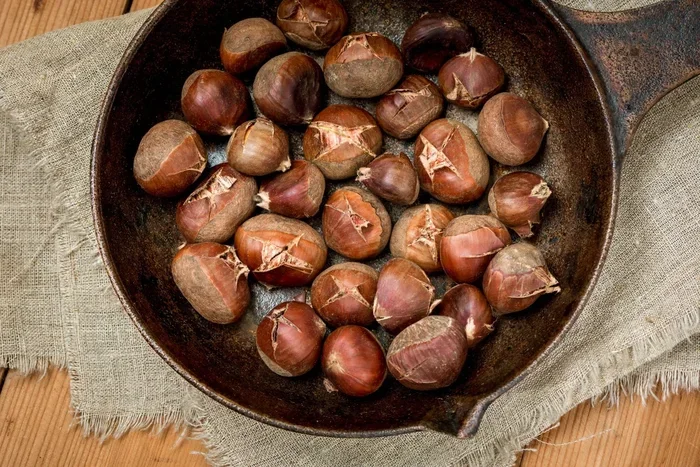
The chestnuts are done when the shells have curled back at the scored X and the nuts look golden brown. You should also smell a rich, nutty aroma. If you are unsure, take one out and let it cool for a minute. Then try to peel it. If the shell comes off easily and the meat is tender, they are ready.
Step 5: Peel While Warm
This is the most important step. Remove the shells and the thin brown skin while the chestnuts are still warm. If you let them cool completely, the skin becomes tough and sticks to the nut. Use a clean kitchen towel to hold the hot chestnuts if needed.
Slide the shell off through the X you cut earlier. Then gently peel away the papery skin underneath. The result should be a smooth, creamy nut that is ready to eat.
How Long to Cook Chestnuts in the Oven
Timing is closely tied to temperature. At the best temperature to cook chestnuts in the oven, which is 425°F, most chestnuts need between 20 and 30 minutes. But there are some nuances to consider.
Timing for Different Oven Temperatures
Different temperatures require different roasting times. Here is a helpful comparison:
| Oven Temperature | Roasting Time | Result |
|---|---|---|
| 400°F | 30 to 35 minutes | Gentle roast, creamy texture, lighter color |
| 425°F | 20 to 30 minutes | Even roast, golden brown, ideal texture |
| 450°F | 15 to 25 minutes | Crispy shell, faster cook, higher risk of burning |
As you can see, the best temperature to cook chestnuts in the oven at 425°F offers the best balance of time and quality. It is not the fastest, but it delivers the most consistent results.
How to Tell When Chestnuts Are Done
There are three clear signs that your chestnuts are ready. First, the shells will curl back at the X mark. Second, the color will shift from pale beige to a deep golden brown. Third, you will smell a warm, sweet, nutty fragrance filling your kitchen.
If you are ever in doubt, take one chestnut out and test it. Let it cool for about a minute. Then try to peel it. A perfectly roasted chestnut will slip out of its shell with very little resistance. The inside should be soft and creamy, not crunchy or hard.
Common Mistakes to Avoid When Cooking Chestnuts
Even with the right temperature, mistakes can happen. Here are the most common errors people make when roasting chestnuts in the oven.
Skipping the Scoring Step
This is the number one mistake. If you do not score the chestnuts, they can burst in the oven. The steam builds up inside and the shell cracks open. This makes a mess and can cause uneven cooking. Always cut an X on the flat side of every single chestnut.
Using the Wrong Oven Temperature
Some people try to roast chestnuts at a very low temperature to save time on the front end. This does not work. Low heat does not create enough steam to cook the nut inside. On the other hand, some set the oven too high and burn the outsides before the insides are done. The best temperature to cook chestnuts in the oven is 425°F for a reason. Stick with it.
Overcrowding the Baking Sheet
It can be tempting to fit as many chestnuts as possible on one sheet. Resist this urge. Overcrowding blocks airflow and leads to uneven roasting. Some nuts will be too done while others are undercooked. Use multiple baking sheets if you need to roast a large batch.
Letting Them Cool Before Peeling
This is a mistake that ruins the entire experience. If you wait for the chestnuts to cool, the skin hardens and sticks to the meat. Peeling becomes frustrating, and you end up losing pieces of the nut. Peel them while they are still warm. Use a towel to protect your hands.
Not Soaking or Drying Properly
If you choose to soak your chestnuts, make sure you drain and dry them well. Wet chestnuts on the baking sheet will steam instead of roast. This leads to a soft, soggy shell instead of the crispy texture you want. Pat them dry with a towel after soaking.
Tips for Perfect Chestnuts Every Time
Now that you know the right temperature and common pitfalls, here are some expert tips to elevate your chestnut roasting game.
Seasoning Ideas for Roasted Chestnuts
Plain roasted chestnuts are delicious on their own. But a little seasoning can take them to the next level. Try tossing warm chestnuts with a pinch of sea salt and a drizzle of honey. For a savory twist, add a sprinkle of rosemary or smoked paprika.
Some people love a light coating of melted butter and a dusting of cinnamon sugar. The possibilities are endless. Experiment with different flavors and find your favorite combination.
Using a Skillet for Stovetop Roasting
If you do not have access to an oven, you can roast chestnuts on the stovetop. Use a dry skillet over medium heat. Add the scored chestnuts and shake the pan constantly for about 15 to 20 minutes. This method works well but requires more attention. The oven method at the best temperature to cook chestnuts in the oven is still the most reliable for consistent results.
Storing and Serving Leftover Chestnuts
Roasted chestnuts taste best on the day they are made. But if you have leftovers, store them in an airtight container at room temperature. They will keep for up to three days. For longer storage, place them in the refrigerator where they last up to a week.
Reheat leftover chestnuts in the oven at 350°F for about 5 minutes. This refreshes the texture and brings back some of that crispy shell. Avoid microwaving, as it can make them rubbery.
Serving Suggestions
Roasted chestnuts are incredibly versatile. Here are some ways to enjoy them:
- Add them to stuffing for a holiday turkey or roast.
- Blend them into soups for a creamy, nutty flavor.
- Chop them and toss them into salads for crunch.
- Use them in desserts like chestnut puree or chocolate truffles.
- Enjoy them as a warm, cozy snack on a cold evening.
No matter how you serve them, the best temperature to cook chestnuts in the oven ensures they taste their absolute best. The effort you put into preparation and roasting pays off with a rich, satisfying flavor that is hard to beat.
The Science Behind Roasting Chestnuts
Understanding a little bit about the science can help you appreciate why the best temperature to cook chestnuts in the oven matters so much. Chestnuts are unique among nuts because they are high in starch and moisture. Most other nuts are high in fat, which allows them to roast at higher temperatures without drying out.
When you apply heat to a chestnut, the starch granules absorb the internal moisture and swell. This is what creates the creamy, soft texture that makes roasted chestnuts so special. The Maillard reaction also occurs at the surface, which is the chemical process responsible for browning and developing complex flavors. This reaction works best at temperatures between 400°F and 450°F, which is exactly why the best temperature to cook chestnuts in the oven falls in this range.
The scoring we talked about earlier plays a scientific role too. By cutting the surface, you create a vent for steam to escape. Without this vent, the internal pressure builds up and the chestnut bursts. The vent also allows the Maillard reaction to reach the flesh of the nut, adding flavor and color to the inside.
This is why the best temperature to cook chestnuts in the oven is not just about convenience. It is about creating the ideal conditions for these chemical reactions to happen. Get the temperature right, and the science does the rest for you.
Chestnut Varieties and How They Affect Roasting
Not all chestnuts are the same. Different varieties can behave slightly differently at the best temperature to cook chestnuts in the oven. Here is what you should know.
European chestnuts are the most common variety found in grocery stores. They are medium-sized with a sweet, mild flavor. They roast beautifully at 425°F and are the standard choice for most recipes.
Chinese chestnuts are smaller and slightly sweeter. They have a thinner shell, which means they roast a bit faster. You may need to reduce the cooking time by a few minutes when roasting Chinese chestnuts at the best temperature to cook chestnuts in the oven.
American chestnuts are rarer but have a rich, buttery flavor. They are smaller than European varieties and cook quickly. Keep a close eye on them to prevent burning.
No matter which variety you choose, the preparation steps remain the same. Score, soak (optional), dry, and roast at the best temperature to cook chestnuts in the oven. The variety only changes the timing slightly.
Frequently Asked Questions
Can I roast chestnuts at a lower temperature?
Yes, you can roast chestnuts at 400°F, but it will take longer, about 30 to 35 minutes. The result will be slightly less crispy on the outside but still creamy inside. The best temperature to cook chestnuts in the oven remains 425°F for the ideal balance of texture and flavor.
Do I need to peel the brown skin after roasting?
Yes, you should remove both the shell and the thin brown skin underneath. The skin has a bitter taste that can ruin the flavor of the chestnut. Peel it while the nuts are still warm for the easiest experience.
Can I use frozen chestnuts for oven roasting?
Frozen chestnuts can work, but they need to be thawed first. Thaw them at room temperature for about an hour before scoring and roasting. The best temperature to cook chestnuts in the oven applies the same way to thawed frozen chestnuts as it does to fresh ones.
Why do my chestnuts burn on the outside but stay raw inside?
This usually happens when the oven is too hot or the chestnuts are cut too thickly. Make sure your oven is set to the best temperature to cook chestnuts in the oven, which is 425°F. Also, make sure you score deep enough to allow heat to penetrate the center of the nut.
Can I roast chestnuts without scoring them?
It is not recommended. Without a score, the steam has no way to escape. The chestnuts can burst in the oven, and the inside may not cook evenly. Always cut an X on the flat side of each chestnut before roasting at the best temperature to cook chestnuts in the oven.
How do I know if my chestnuts are fresh enough to roast?
Fresh chestnuts feel heavy and firm. If you shake one and hear rattling, it is likely dried out and not worth roasting. Submerge the chestnuts in water. Fresh ones will sink. Any that float should be discarded, as they have lost moisture and will not roast well at the best temperature to cook chestnuts in the oven.
Conclusion
Roasting chestnuts in the oven is a simple and rewarding process. The secret lies in the best temperature to cook chestnuts in the oven, which is between 425°F and 450°F. This range gives you the perfect balance of crispy shells and creamy, tender interiors.
Remember to score your chestnuts, arrange them in a single layer, and roast for 20 to 30 minutes. Peel them while they are still warm for the easiest experience. Avoid common mistakes like overcrowding the pan or skipping the scoring step.
With the right technique and the best temperature to cook chestnuts in the oven, you can enjoy perfectly roasted chestnuts any time of year. They make a wonderful snack, a festive side dish, or a delicious addition to your favorite recipes. Try it yourself and taste the difference that the right temperature makes.