Can Bacon Be Cooked In Oven For Perfectly Crispy Bacon
Yes, you can absolutely cook bacon in the oven, and it is one of the easiest and best methods for achieving crispy, evenly cooked bacon every time. Oven-baked bacon eliminates the mess and splatter that comes with stovetop cooking, making cleanup a breeze. Whether you prefer thin-cut or thick-cut bacon, the oven delivers consistent results with minimal effort. This guide covers everything from temperature and timing to tips for the crispiest bacon you have ever tasted.
Key Takeaways
- Oven cooking is the simplest way to make crispy bacon: It requires almost no attention and produces even results.
- 400°F is the sweet spot: This temperature cooks bacon perfectly without burning it.
- Use parchment paper or a wire rack: These tools make cleanup effortless and help bacon cook evenly.
- Thick-cut and thin-cut bacon both work: Adjust cooking time based on the thickness of your strips.
- No splatter means a cleaner kitchen: Oven-baked bacon keeps grease off your stovetop and countertops.
- You can cook a large batch at once: The oven fits more bacon than any skillet ever could.
- Drain and store properly for the best texture: Paper towels and airtight containers keep bacon crispy longer.
📑 Table of Contents
- Why Cooking Bacon In The Oven Is A Game-Changer
- How To Cook Bacon In The Oven: Step-By-Step Guide
- The Best Temperature And Time For Oven-Baked Bacon
- Thick-Cut vs Thin-Cut Bacon In The Oven
- Tips For The Crispiest Oven Bacon Every Time
- Cleaning Up After Cooking Bacon In The Oven
- Common Mistakes To Avoid When Baking Bacon
- Storing And Reheating Oven-Baked Bacon
- Frequently Asked Questions
- Final Thoughts On Cooking Bacon In The Oven
Why Cooking Bacon In The Oven Is A Game-Changer
If you have ever stood over a hot skillet, juggling bacon strips and splattering grease, you know the struggle. Cooking bacon on the stovetop can be messy, unpredictable, and stressful. The good news is that bacon cooked in oven solves every single one of those problems.
When you bake bacon in the oven, you lay the strips on a sheet pan and let the heat do all the work. There is no flipping. There is no worrying about hot grease popping onto your skin. You simply set the timer and walk away. This hands-off approach is why so many home cooks have switched to oven-baked bacon as their go-to method.
The benefits go beyond convenience. Oven-baked bacon cooks more evenly than pan-fried bacon. Every strip gets the same amount of heat exposure, which means consistent crispiness from edge to edge. Plus, you can cook a much larger batch at once, which is perfect for weekend brunches or feeding a crowd.
Another big advantage is the cleanup. Stovetop bacon leaves a greasy mess on your cooktop, backsplash, and sometimes even the floor. Baking bacon in oven keeps all that grease contained on the sheet pan. A quick wipe and you are done.
Whether you are a breakfast lover or someone who loves adding crispy bacon to burgers and salads, learning how to cook bacon in oven will change your kitchen routine forever.
The Science Behind Perfect Oven Bacon
Understanding why oven-baked bacon works so well helps you appreciate the method even more. When bacon is placed in a hot oven, the heat surrounds every strip evenly. The fat renders slowly and consistently, which is what gives you that satisfying crunch without burning the meat.
On a stovetop, the heat comes from below only. The bottom of the bacon gets much hotter than the top. This creates uneven cooking and often leads to some strips being too crispy while others are still flabby. The oven solves this problem completely.
The rendering of fat is also key to crispy bacon. As the fat melts out of the bacon strips, the remaining meat and skin become thinner and crunchier. When you bake bacon in oven, the fat drips away from the meat onto the pan, which further enhances the crispiness.
How To Cook Bacon In The Oven: Step-By-Step Guide
Now that you know why oven-baked bacon is so great, let us get into the actual process. Follow these simple steps for perfect results every single time.
Step 1: Gather Your Supplies
You do not need much to make great oven-baked bacon. Here is what you will need:
- A rimmed sheet pan or baking sheet
- Parchment paper or aluminum foil
- A wire rack (optional but recommended)
- Your favorite bacon strips
- Tongs for handling hot bacon
The sheet pan is the star of the show. Make sure it has a rim so the grease does not spill into your oven. Parchment paper is a game-changer because it prevents sticking and makes cleanup even easier.
Step 2: Preheat Your Oven
Set your oven to 400°F (200°C). Let it preheat fully before placing the bacon inside. A hot oven is essential for getting that perfect crispy bacon texture. If your oven runs hot, you can drop the temperature to 375°F instead.
Step 3: Line The Pan And Arrange The Bacon
Line your sheet pan with parchment paper or foil. Then lay out the bacon strips in a single layer. Do not overlap the strips. Overlapping causes uneven cooking and steaming instead of crisping.
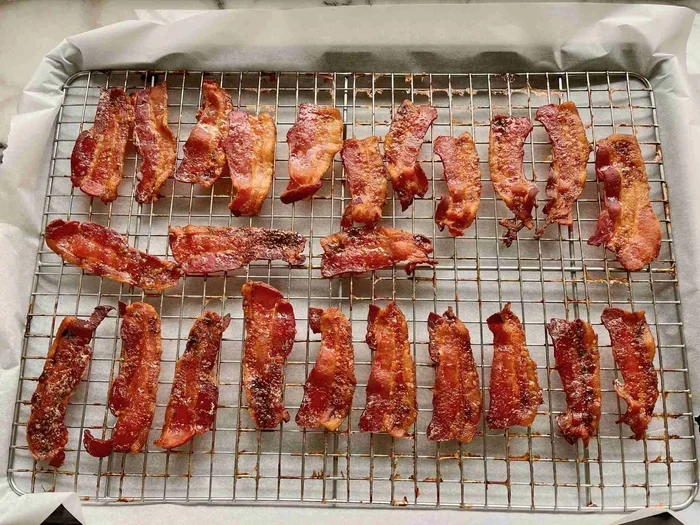
If you want even crispier results, place a wire rack on top of the sheet pan and lay the bacon on the rack. This allows the grease to drip all the way through, which produces a more uniform crunch.
Step 4: Bake And Wait
Place the pan in the oven on the middle rack. Set a timer for 15 to 20 minutes. You do not need to flip the bacon. The oven does all the work for you.
Here is a quick reference for timing:
- 15 minutes: Chewy and flexible bacon
- 18 minutes: Perfectly crispy bacon
- 20+ minutes: Extra crispy and deeply browned
Keep an eye on the bacon after the 15-minute mark. Every oven is different, and your preferred level of crispiness will determine the exact timing.
Step 5: Drain And Serve
Once the bacon is done, remove the pan from the oven using oven mitts. Transfer the strips to a plate lined with paper towels. This absorbs excess grease and keeps the bacon crispy as it cools.
Let the bacon rest for a minute or two before serving. It will continue to crisp up slightly as it cools. Bacon cooked in oven stays crispy longer than stovetop bacon, so you can serve it a little later without losing that satisfying crunch.
The Best Temperature And Time For Oven-Baked Bacon
Getting the bacon temperature and cooking time right is the most important part of this process. Too low and the bacon will be soggy. Too high and it will burn before the fat has a chance to render properly.
400°F is widely considered the best temperature for oven-baked bacon. At this heat, the bacon cooks through evenly, the fat renders completely, and you get a beautiful golden-brown color. Most recipes agree that 18 to 20 minutes at 400°F produces the best results.
If you prefer a slightly different texture, here are some adjustments you can try:
- 375°F for 20-22 minutes: Slightly lower heat gives you more control and reduces the risk of burning. Great for beginners.
- 425°F for 12-15 minutes: Higher heat produces ultra-crispy bacon faster. Watch it closely to prevent burning.
- 350°F for 25-30 minutes: Low and slow approach works well for thick-cut bacon and gives a more even render.
For thick-cut bacon, the lower and slower method works best because the extra thickness needs more time for the fat to render. Thin-cut bacon cooks faster and does well at higher temperatures.
How To Know When Bacon Is Done
Knowing when your bacon is done can be tricky, especially if you are new to oven-baked bacon. Here are some telltale signs:
- The bacon has turned a deep golden-brown color.
- The edges look slightly curled and darkened.
- The fat has rendered and the strips look translucent in places.
- The bacon feels firm when you tap it with tongs.
- It makes a satisfying crackling sound when you bend it slightly.
Remember that the bacon will continue to crisp up a bit as it cools on the paper towels. So if you like chewy bacon, pull it out just a touch before you think it is done.
Thick-Cut vs Thin-Cut Bacon In The Oven
Not all bacon is created equal, and the thickness of your strips matters a lot when you are cooking bacon in oven. Understanding the difference helps you adjust your approach for the best results.
| Feature | Thin-Cut Bacon | Thick-Cut Bacon |
|---|---|---|
| Cooking Time | 15-18 minutes | 20-25 minutes |
| Best Temperature | 400°F | 375°F |
| Texture | Very crispy, delicate | Chewy center, crispy edges |
| Best For | Sandwiches, salads, snacks | Breakfast plates, burgers |
| Grease Rendered | Fast and even | Slower, needs more time |
Thin-cut bacon is the most popular choice for oven cooking. It cooks quickly, gets very crispy, and works well for most recipes. If you are making bacon for a sandwich or a salad, thin-cut is the way to go.
Thick-cut bacon needs more time and a slightly lower temperature. The extra meat requires patience for the fat to render properly. But the payoff is huge: thick-cut oven-baked bacon has a wonderful contrast between the crispy edges and the slightly chewy center.
No matter which type you choose, always arrange the strips in a single layer on your sheet pan. Overcrowding is the number one mistake people make when they bake bacon in oven. Give each strip room to breathe.
Tips For The Crispiest Oven Bacon Every Time
Making great oven-baked bacon is simple, but a few pro tips can take your results from good to amazing. Here is what the experts recommend:
Use Parchment Paper
This is the single easiest trick for better oven-baked bacon. Parchment paper prevents sticking, reduces splatter, and makes cleanup a breeze. You can even reuse the parchment if it is not too greasy.
Do Not Skip The Wire Rack
A wire rack elevates the bacon above the grease, allowing it to drain freely. This produces significantly crispier results than placing bacon directly on the pan. If you want the ultimate crispy bacon, a wire rack is a must-have tool.
Salt After Cooking
Many people salt their bacon before cooking, but this can draw out moisture and prevent maximum crispiness. Instead, season with a light sprinkle of salt, pepper, or your favorite spice blend right after the bacon comes out of the oven. This keeps the texture perfectly crunchy.
Experiment With Flavors
Plain oven-baked bacon is already delicious, but you can take it to the next level. Try these flavor additions before baking:
- A light drizzle of maple syrup for sweet bacon
- A sprinkle of brown sugar and cayenne for a spicy-sweet kick
- A dusting of black pepper and garlic powder for a savory twist
- A touch of honey and sriracha for a sweet-heat combo
Cook In Batches If Needed
While the oven can fit more bacon than a skillet, do not overcrowd the pan. If you are cooking a very large batch, use two sheet pans and rotate them halfway through. This ensures every strip gets the same amount of heat and turns out perfectly crispy.
Cleaning Up After Cooking Bacon In The Oven
One of the best things about bacon cooked in oven is how easy cleanup is compared to stovetop cooking. Here is how to handle it like a pro.
If you used parchment paper, simply lift it off the pan and toss it in the trash. The bacon grease stays on the paper, and your sheet pan stays clean. This alone saves you from scrubbing a greasy pan.
If you did not use parchment, let the pan cool for a few minutes first. Then pour the solidified grease into a heat-safe container for disposal or reuse. Wipe the pan with a paper towel, and wash it with warm soapy water. The grease should come off easily.
Pro tip: Do not pour bacon grease down your drain. It will solidify in your pipes and cause clogs. Instead, store it in a jar in the fridge. Bacon grease is a flavorful cooking fat that you can use for frying eggs, roasting vegetables, or making gravy.
Can You Reuse Bacon Grease?
Absolutely. Strained bacon grease keeps in the refrigerator for weeks. It adds a rich, smoky flavor to all sorts of dishes. Many cooks consider it a pantry staple for good reason. Just strain it through a fine mesh sieve to remove any food particles, and store it in a sealed container.
Common Mistakes To Avoid When Baking Bacon
Even though cooking bacon in oven is very forgiving, a few common mistakes can ruin your results. Here is what to watch out for:
- Overcrowding the pan: This causes uneven cooking and steaming instead of crisping. Give every strip its own space.
- Using the wrong pan: A dark or nonstick pan can cause the bottom of the bacon to burn. A light-colored rimmed sheet pan works best.
- Not preheating the oven: Placing bacon in a cold oven leads to uneven cooking and soggy results. Always preheat first.
- Skipping the parchment paper: This makes cleanup harder and can cause sticking, especially with leaner cuts of bacon.
- Leaving the bacon too long: Bacon continues to crisp as it cools. Pull it out when it looks slightly underdone to your liking.
Avoiding these mistakes ensures that every batch of oven-baked bacon comes out perfectly crispy and delicious.
Storing And Reheating Oven-Baked Bacon
If you made more crispy bacon than you can eat in one sitting, you will be happy to know it stores well.
Let the bacon cool completely before storing. Place it in an airtight container with a paper towel between layers to absorb excess moisture. Stored this way, oven-baked bacon stays crispy in the refrigerator for up to five days.
To reheat, place the bacon on a baking sheet in a 350°F oven for 3-5 minutes. This restores the crunch without drying it out. You can also reheat in the microwave for 20-30 seconds, but the oven method gives better results.
Can you freeze oven-baked bacon? Yes! Lay the cooled bacon strips in a single layer on a baking sheet, freeze until solid, then transfer to a freezer bag. It keeps for up to three months and reheats beautifully.
Frequently Asked Questions
What Is The Best Temperature To Cook Bacon In The Oven?
400°F is the most recommended temperature for oven-baked bacon. It cooks the bacon evenly and produces a beautiful golden-brown color with a satisfying crunch. If you are using thick-cut bacon, you can drop the temperature to 375°F and add a few extra minutes to ensure the fat renders fully.
How Long Does It Take To Cook Bacon In The Oven?
Most oven-baked bacon takes between 15 and 20 minutes at 400°F. Thin-cut bacon tends to be done closer to 15 minutes, while thick-cut bacon may need 20 to 25 minutes. Always check the bacon at the 15-minute mark and adjust based on your preferred level of crispiness.
Do You Need To Flip Bacon When Cooking It In The Oven?
No, you do not need to flip bacon when you cook bacon in oven. The heat circulates evenly around the strips, so both sides cook at the same rate. This is one of the biggest advantages of baking bacon in oven compared to stovetop cooking.
Can You Use Aluminum Foil Instead Of Parchment Paper?
Yes, aluminum foil works as a liner for oven-baked bacon. It makes cleanup very easy and helps contain the grease. However, parchment paper is slightly better because it prevents sticking more effectively and does not react with the acidic compounds in the bacon fat.
Is Oven-Baked Bacon Healthier Than Pan-Fried Bacon?
Many people consider oven-baked bacon to be a healthier option because the grease drips away from the meat during cooking. This reduces the overall fat content of the finished product. While the calorie difference is not huge, bacon cooked in oven does absorb less grease than pan-fried bacon.
Can You Cook Frozen Bacon In The Oven?
Yes, you can cook frozen bacon in the oven, but you will need to add several minutes to the cooking time. Preheat the oven to 400°F, place the frozen strips on a lined sheet pan, and bake for 25 to 30 minutes. Flip the strips halfway through for more even cooking. The bacon will thaw and crisp up as it bakes.
Final Thoughts On Cooking Bacon In The Oven
Bacon cooked in oven is hands-down the easiest, cleanest, and most consistent way to make crispy bacon at home. Once you try it, you will wonder why you ever bothered with the stovetop method. The process is simple, the results are reliable, and the cleanup is minimal.
Whether you prefer thin and shatteringly crispy strips or thick-cut bacon with a chewy center, the oven delivers every time. With the right bacon temperature, a little patience, and these tips in your back pocket, you will be making restaurant-quality crispy bacon in your own kitchen.
So next time you are craving bacon, skip the skillet. Preheat your oven, lay out your strips on a parchment-lined sheet pan, and let the oven do the work. You will be rewarded with perfectly crispy oven-baked bacon that tastes incredible and makes your mornings so much easier.