How To Make Ham Jerky In The Oven In Just One Hour
Learning how to make ham jerky in the oven is easier than you think. With just a few simple ingredients and one hour of your time, you can create delicious chewy ham snacks right at home. This homemade jerky recipe uses your regular oven, so you do not need any fancy equipment. Whether you want a protein snack for hiking or a tasty treat for meal prep, this method works perfectly. Follow along and you will have amazing oven-baked ham jerky in no time.
There is something really satisfying about making your own snacks at home. When you learn how to make ham jerky in the oven, you open up a world of delicious, protein-packed treats. This homemade jerky recipe is simple, fast, and gives you results that rival any store-bought product.
Many people think jerky making is complicated. They picture expensive dehydrators and long hours in the kitchen. But making oven-baked ham jerky is one of the easiest kitchen projects you can try. In just one hour, you can have a batch of savory meat strips ready to enjoy.
The beauty of this method is its simplicity. You need a few basic ingredients, a baking sheet, and your oven. No special tools. No complicated techniques. Just honest food made with care. Whether you are a beginner cook or a seasoned home chef, this project is perfect for you.
Ham jerky makes an excellent protein snack for busy days. It fits perfectly into meal prep ideas for the week ahead. You can pack it for work, toss it in your hiking bag, or simply enjoy it as a guilt-free treat. Let us walk through the entire process step by step.
Key Takeaways
- Quick and Easy: You can make ham jerky in the oven in just one hour with minimal prep time.
- No Special Equipment Needed: Your regular oven works great as a food dehydrator substitute.
- Customizable Flavors: Try different marinades and seasonings to create your own unique jerky styles.
- Budget-Friendly: Making jerky at home saves money compared to store-bought options.
- Perfect for Meal Prep: Homemade ham jerky stays fresh for weeks and makes a great on-the-go snack.
- Healthier Alternative: You control the ingredients, so you can reduce sodium and avoid preservatives.
📑 Table of Contents
- What Is Ham Jerky And Why Make It At Home
- Ingredients You Will Need
- Step-By-Step Oven Instructions
- Tips For Perfect Ham Jerky Every Time
- How To Store Your Homemade Ham Jerky
- Creative Flavor Variations To Try
- Common Mistakes To Avoid
- Expert Insights on Making Oven Jerky
- Why This Recipe Works So Well
- Conclusion
What Is Ham Jerky And Why Make It At Home
Ham jerky is a type of dried, cured meat made from ham slices. It is similar to traditional beef jerky but uses ham as the base. The ham gets marinated in flavorful seasonings and then dried in the oven until it becomes chewy and shelf-stable.
Making your own DIY jerky at home has many benefits. First, you know exactly what goes into it. Store-bought jerky often contains added sugars, preservatives, and mystery ingredients. When you make it yourself, you control every single element.
A Better Alternative to Store-Bought Jerky
Commercial jerky can be pricey. A small bag often costs several dollars. When you make oven-baked ham jerky at home, the cost per serving drops significantly. A single ham can produce multiple batches of snacks.
Another advantage is freshness. Homemade jerky does not contain the same preservatives found in commercial products. This means a shorter shelf life, yes, but also a cleaner, more natural ingredient list. For many families, this trade-off is well worth it.
Why Ham Works Great for Jerky
Ham brings a naturally savory and slightly sweet flavor to jerky. Unlike lean beef, ham already has a good amount of fat and moisture, which helps keep the final product chewy. Thinly sliced ham dries evenly and absorbs marinades beautifully.
You can use different types of ham for this recipe. Hickory smoked ham adds a wonderful smoky depth. Honey ham brings a touch of sweetness. Black forest ham offers a rich, robust flavor. Each variety creates a unique end product, so feel free to experiment.
Ingredients You Will Need
Gathering your ingredients is the first step in making great ham jerky. The good news is that you probably already have most of these items in your kitchen. Here is what you need to get started.
Core Ingredients
- Thinly sliced ham – About 1 to 2 pounds. Look for deli-style or sliced ham from the meat counter.
- Soy sauce – Adds saltiness and umami depth to the marinade.
- Brown sugar – Balances the salt with a touch of sweetness.
- Garlic powder – Provides a warm, savory base flavor.
- Black pepper – Adds a mild kick and complexity.
- Liquid smoke – Optional, but it gives a classic smoky jerky taste.
- Worcestershire sauce – Boosts the overall savory profile.
Optional Flavor Add-Ins
Once you master the basic recipe, you can get creative. Here are some jerky seasoning ideas to try:
- Teriyaki ham jerky – Add teriyaki sauce and a pinch of ginger for an Asian-inspired twist.
- Spicy jerky – Mix in cayenne pepper or red pepper flakes for heat.
- Pineapple glaze – Add a splash of pineapple juice for a tropical flavor.
- Peppered style – Extra black pepper and cracked pepper for a bold bite.
- Maple glazed – Swap brown sugar for pure maple syrup for a rich, sweet flavor.
Step-By-Step Oven Instructions
Now comes the fun part. Making ham jerky in the oven is a straightforward process. Follow these steps carefully, and you will have perfect results every time.
Step One: Prep the Ham
Start by laying your ham slices flat on a cutting board. You want each slice to be as thin and even as possible. Thinner slices dry faster and more evenly, which is the key to great jerky texture.
If your ham slices are too thick, you can slice them in half lengthwise. The goal is pieces that are roughly the size of a deck of cards. Pat each slice dry with paper towels before moving to the next step. Removing excess moisture helps the drying process along.
Step Two: Prepare the Marinade
In a medium bowl, combine your soy sauce, brown sugar, garlic powder, black pepper, Worcestershire sauce, and liquid smoke if using. Whisk everything together until the sugar dissolves. The marinade should smell savory and slightly sweet.
Place your ham slices into a large zip-lock bag or a shallow dish. Pour the marinade over the ham, making sure every piece gets coated. Seal the bag or cover the dish and refrigerate for at least 30 minutes. For deeper flavor, marinate for up to two hours.
Step Three: Set Up Your Oven
Preheat your oven to the lowest possible temperature setting. Most ovens go down to 170°F or 200°F. For the best dehydrated meat snacks, aim for around 170°F to 200°F. This low temperature is essential for slow-drying the ham without cooking it.
Line a baking sheet with parchment paper or a silicone mat. This prevents the ham from sticking and makes cleanup a breeze. If you have multiple baking sheets, use them all. You want a single layer of ham slices with no overlapping pieces.
Step Four: Arrange and Bake
Remove the ham slices from the marinade and place them on the prepared baking sheets. Use tongs to lift each piece and let any excess marinade drip off. You do not want puddles of liquid on the baking sheet.
Place the sheets in the oven on the middle rack. Prop the oven door open slightly with a wooden spoon. This allows moisture to escape, which is critical for proper drying. The low and slow approach is what transforms wet ham into chewy jerky.
Bake for about 45 to 60 minutes. Check the ham at the 30-minute mark and flip each slice. This ensures even drying on both sides. Continue baking until the jerky is dry and slightly bendable but does not snap in half.
Step Five: Cool and Store
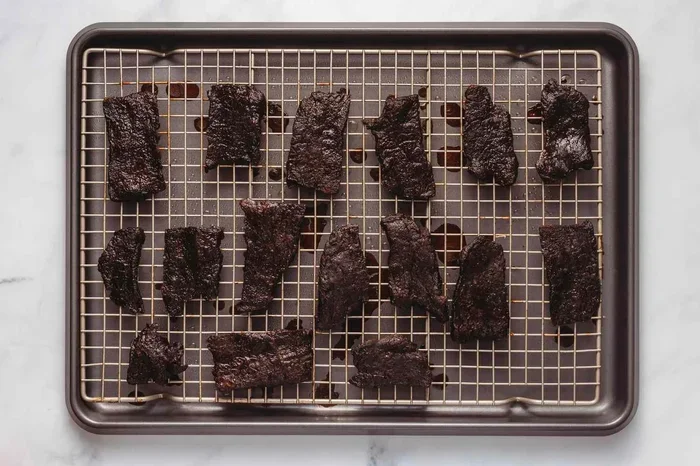
Remove the baking sheets from the oven and let the jerky cool completely on a wire rack. This cooling step is important. As the jerky cools, it firms up and develops its final chewy texture.
Once cooled, your shelf-stable snack is ready to enjoy. Store it in an airtight container or zip-lock bag. Properly stored, homemade ham jerky lasts for about one to two weeks at room temperature.
Tips For Perfect Ham Jerky Every Time
Making great jerky is all about technique and attention to detail. Here are some expert tips that will elevate your results.
Slice Against the Grain
Cutting against the grain of the ham creates a more tender chew. If you cut with the grain, the jerky can be tough and stringy. Look at the ham slices and identify the direction of the muscle fibers. Cut perpendicular to those fibers for the best texture.
Pat the Slices Dry
Moisture is the enemy of good jerky. The more surface moisture you remove before baking, the faster and more evenly your jerky dries. A quick pat with paper towels makes a noticeable difference in the final product.
Do Not Rush the Drying Process
It can be tempting to turn up the heat to speed things along. Resist that urge. High temperatures cook the ham instead of drying it. This creates a different texture and can lead to tough, rubbery jerky. Keep the temperature low and let the oven do its work.
Check for Doneness
The best way to test your jerky is the bend test. Pick up a strip and bend it. It should crack slightly on the surface but not snap completely in half. If it breaks cleanly, it may be over-dried. If it bends without cracking, it needs more time.
Use Parchment Paper
Parchment paper prevents sticking and promotes even airflow around each slice. It is a small step that makes a big difference in the final result and saves you from frustration during cleanup.
How To Store Your Homemade Ham Jerky
Proper storage keeps your jerky fresh and flavorful for as long as possible. Since you made homemade jerky without preservatives, storage matters more than with commercial products.
Short-Term Storage
For enjoying your jerky within one to two weeks, store it in an airtight container at room temperature. A glass jar with a tight lid works well. You can also use a zip-lock bag with the air pressed out. Keep the container in a cool, dark place like a pantry or cupboard.
Long-Term Storage
For longer storage, consider vacuum-sealing your jerky. A vacuum sealer removes air and extends freshness significantly. Vacuum-sealed jerky can last for up to two months in the pantry or even longer in the freezer.
If you do not have a vacuum sealer, you can freeze the jerky. Place individual portions in freezer-safe bags, remove as much air as possible, and freeze. Thaw at room temperature before eating. Frozen jerky stays good for up to three months.
Signs Your Jerky Has Gone Bad
Trust your senses when checking stored jerky. Discard any pieces that develop an off smell, unusual discoloration, or visible mold. Fresh homemade jerky should smell savory and look slightly darkened but uniform in color.
Creative Flavor Variations To Try
Once you have mastered the basic recipe, the real fun begins. Experimenting with flavors is what makes homemade jerky so exciting. You can create a different batch for every mood and occasion.
Sweet and Smoky
Add extra brown sugar and a generous splash of liquid smoke. This combination creates a rich, barbecue-style jerky that pairs wonderfully with a cold drink. It is a crowd favorite for game day gatherings and outdoor events.
Asian-Inspired Teriyaki
Swap the Worcestershire sauce for teriyaki sauce and add a teaspoon of grated fresh ginger. A splash of rice vinegar brightens the flavor. This teriyaki ham jerky style is slightly sweet and incredibly addictive.
Fiery Hot
For those who love heat, add crushed red pepper flakes, a dash of hot sauce, and a pinch of cayenne pepper. The sweetness of the ham balances the spice beautifully. This variation is perfect for people who enjoy bold, intense flavors.
Herb and Garlic
Boost the garlic powder and add dried rosemary and thyme. This savory combination feels rustic and satisfying. It works especially well with smoked ham varieties and makes a great addition to charcuterie boards.
Common Mistakes To Avoid
Even simple recipes have pitfalls. Knowing what to avoid helps you skip frustration and achieve better results from the start.
Using Ham That Is Too Thick
Thick slices take much longer to dry and may not dry evenly. Always aim for thin, uniform slices. If your ham is thick, slice it down to a consistent thickness before marinating.
Overcrowding the Baking Sheet
Giving each slice enough space is essential for proper airflow. Overcrowding leads to uneven drying and can create soggy spots. Use multiple baking sheets if needed, and rotate them during baking.
Skipping the Marination Step
Marinating is not optional if you want flavorful jerky. The marinade infuses the ham with taste and helps with the drying process. Skipping this step results in bland, plain jerky that lacks character.
Setting the Oven Too Hot
High heat cooks the ham rather than dehydrating it. This creates a jerky that is tough and leathery instead of tender and chewy. Always use the lowest heat setting your oven allows.
Not Letting the Jerky Cool Properly
The cooling phase is when the texture finalizes. Cutting into hot jerky can make it seem softer than it will be once fully cooled. Patience here pays off with better texture.
Expert Insights on Making Oven Jerky
Professional jerky makers and food experts agree on a few key principles. Understanding these will help you elevate your homemade results.
Food safety comes first. When making cured meat strips at home, always start with fresh, high-quality ham. Use clean hands and sanitized surfaces. Proper marination and low-temperature drying work together to create a safe, shelf-stable product.
Consistency is everything. The best oven jerky recipes succeed because of even slicing and even spacing. Take the extra few minutes to make sure each piece is uniform. This small effort makes a big difference in the final batch.
Your oven is a dehydrator. Many people do not realize that a standard home oven can do the job of a dedicated food dehydrator. The key is low heat and good airflow. With the oven door propped open and a fan nearby if needed, you get excellent results without extra equipment.
Experimentation leads to mastery. Every batch you make teaches you something new. Pay attention to what works and what does not. Keep notes on marinade ratios and drying times. Over time, you will develop your own signature style of savory meat strips that is uniquely yours.
Why This Recipe Works So Well
The one-hour timeframe is what makes this recipe so appealing. Most homemade jerky recipes take several hours or even overnight marination plus long drying times. This method streamlines the process without sacrificing flavor or quality.
The combination of soy sauce, brown sugar, and garlic powder creates a well-balanced marinade that enhances the natural flavor of the ham. The oven does the rest of the work, slowly removing moisture and concentrating the savory goodness.
This approach fits perfectly into a busy lifestyle. You can prep the ham and marinade in the morning, pop it in the oven before work, and come home to a kitchen full of delicious aroma. The entire process is hands-off for most of the hour, giving you time to handle other tasks.
For families looking for healthier snack options, homemade ham jerky is a fantastic choice. It is high in protein, low in unnecessary additives, and satisfying between meals. Kids and adults alike enjoy these chewy, flavorful bites. They make excellent lunchbox additions and afternoon snacks.
Conclusion
Making ham jerky in the oven is one of the simplest and most rewarding kitchen projects you can try. In just one hour, you transform basic ham slices into delicious, chewy snacks that everyone loves. The process requires minimal equipment, basic ingredients, and a little patience.
This homemade jerky recipe gives you full control over what goes into your food. You choose the flavors. You decide the level of sweetness and saltiness. You create a protein snack that fits your personal taste and dietary preferences.
Whether you are new to jerky making or looking for a faster method, this oven technique delivers outstanding results. The thin-slicing approach and low-temperature drying ensure every batch comes out perfectly chewy and full of flavor. Once you try it, you will wonder why you ever bought expensive store-bought jerky.
So gather your ingredients, preheat your oven, and give this recipe a try. Your kitchen will smell incredible, and you will have a batch of oven-baked ham jerky ready to enjoy. Share it with friends, pack it for adventures, or simply savor it as a well-earned treat. Happy jerky making!
Frequently Asked Questions
Can I use any type of ham for this recipe?
Yes, you can use almost any type of ham. Deli ham, smoked ham, honey ham, and black forest ham all work wonderfully. The key is to choose thinly sliced ham that dries evenly in the oven. Avoid very thick cuts as they will take much longer to dehydrate properly.
How long does homemade ham jerky last?
When stored in an airtight container at room temperature, homemade ham jerky stays fresh for about one to two weeks. If you vacuum seal it or store it in the freezer, it can last for up to two months or longer. Always check for signs of spoilage before eating any stored jerky.
Do I need a food dehydrator to make ham jerky?
No, you do not need a dehydrator at all. Your regular oven works perfectly as a food dehydrator substitute. The secret is using a low temperature setting and propping the oven door open for airflow. This method produces excellent results without any extra equipment.
Why is my ham jerky too tough or too chewy?
If your jerky is too tough, the oven temperature may have been too high, or the slices were too thick. High heat cooks the meat instead of drying it. For a more tender chew, make sure to slice the ham thinly and keep the oven at a low temperature throughout the drying process.
Can I make ham jerky without soy sauce?
Yes, you can substitute soy sauce with coconut aminos or tamari for a gluten-free option. You can also use salt and a splash of fish sauce for a similar umami flavor. The marinade is flexible, so feel free to adjust based on your dietary needs and taste preferences.
Is homemade ham jerky healthier than store-bought?
Generally, yes. When you make jerky at home, you control the ingredients. You can reduce sodium, eliminate artificial preservatives, and avoid added sugars. Homemade dehydrated meat snacks offer a cleaner, more natural alternative to many commercial jerky products found on store shelves.
=== META TITLE ===
Learn How To Make Ham Jerky In The Oven In One Hour
=== URL SLUG ===
how-to-make-ham-jerky-in-the-oven-in-one-hour
=== SEO TITLE ===
How To Make Ham Jerky In The Oven In Just One Hour