How Long To Bake Potatoes At 350 In The Oven Perfectly
Baking potatoes at 350°F takes about 45 to 60 minutes depending on size. This guide covers everything from prep to plating so you get perfectly baked potatoes every single time. You will learn the right oven temperature, prep steps, and pro tips that make a huge difference.
Key Takeaways
- Bake at 350°F for 45 to 60 minutes: This is the sweet spot for most potato sizes.
- Choose russet potatoes for best results: They have the ideal starch content for fluffy interiors.
- Always poke holes before baking: This lets steam escape and prevents explosions.
- Use olive oil and salt for crispy skin: Simple prep makes a big difference in texture.
- Check doneness with a fork: A fork should slide in smoothly when the potato is ready.
- Large potatoes take longer than small ones: Adjust your cooking time based on size.
- Let potatoes rest for 5 minutes: This helps the inside become fluffy and easy to mash.
📑 Table of Contents
- How Long To Bake Potatoes At 350 In The Oven – The Complete Guide
- What You Need Before You Start
- Step-by-Step Instructions for Perfect Baked Potatoes
- Tips for Crispy Skin and Fluffy Inside
- Common Mistakes That Ruin Your Potatoes
- How Different Potato Sizes Affect Baking Time
- Expert Insights on Baking Potatoes
- Serving Ideas and Toppings
- How to Store and Reheat Leftover Baked Potatoes
- Conclusion
How Long To Bake Potatoes At 350 In The Oven – The Complete Guide
There is something deeply satisfying about a warm, fluffy baked potato straight from the oven. Whether you are making a simple side dish or a loaded baked potato dinner, getting the cooking time right matters a lot. The good news is that baking potatoes at 350 degrees Fahrenheit is one of the most reliable methods you can use.
So, how long to bake potatoes at 350 in the oven? The short answer is between 45 and 60 minutes. But the full answer depends on a few things. The size of your potato, whether you wrap it in foil, and your oven type all play a role. In this guide, we will walk you through every detail so you never have to guess again.
Baked potatoes are a classic comfort food. They pair well with almost anything. From butter and sour cream to chili and cheese, the options are endless. And the best part? You do not need fancy equipment. A basic oven temperature of 350°F works beautifully for nearly every potato variety.
Many home cooks worry about their potatoes coming out undercooked or mushy. That is why we put together this complete guide. We will cover everything from selecting the right potatoes to the final check for doneness. By the end, you will feel confident every time you turn on your oven.
Why 350°F Is the Ideal Temperature
You might wonder why 350°F is the go-to temperature. Other recipes call for higher heat. So why does 350 work so well? The answer lies in even cooking. At 350°F, heat spreads through the potato slowly and evenly. This means the outside does not burn before the inside is done.
Higher temperatures can crisp the skin faster. But they also risk leaving the center hard or raw. Lower temperatures take too long and can dry the potato out. 350°F hits the sweet spot. It gives you a golden brown skin and a fluffy inside without any guesswork.
This temperature also works well for both regular and convection ovens. If you have a convection model, you might reduce the time by about 5 to 10 minutes. We will talk more about that later. For now, know that 350°F is your best friend when baking potatoes.
What You Need Before You Start
Before you preheat your oven, gather a few simple items. You do not need a long shopping list. Most of these things are already in your kitchen. Here is what you need to make perfect baked potatoes:
- Russet potatoes – These are the best choice for baking. Their high starch content creates a fluffy texture.
- Olive oil – A light coating helps crisp the skin beautifully.
- Sea salt – Adds flavor and helps draw out moisture for crunch.
- A baking sheet – Keeps your oven clean and holds the potatoes steady.
- A fork – You will use this to poke holes and check doneness.
- Aluminum foil – Optional, but useful if you prefer softer skin.
- A knife – For a small slit in each potato before baking.
You might also want butter, sour cream, chives, or cheese for serving. Those are entirely up to you. The beauty of baked potatoes is that they are a blank canvas. You can top them however you like.
Choosing the Right Potatoes
Not all potatoes are created equal when it comes to baking. Russet potatoes are the clear winner. They have thick skin and high starch. This combination gives you that perfect fluffy interior with a crispy outside.
You can also use Yukon Gold or fingerling potatoes. They have a creamier texture. But they do not get as crispy on the outside. If you want the classic baked potato experience, stick with russets. Look for potatoes that are firm and smooth. Avoid any with green spots or soft spots.
Size matters too. Large potatoes take longer to bake than small ones. A medium russet about 6 to 8 ounces will bake perfectly in 45 to 55 minutes. Very large potatoes over 10 ounces might need up to 70 minutes. Keep this in mind when planning your meal.
Step-by-Step Instructions for Perfect Baked Potatoes
Now that you have everything ready, let us get into the process. These steps are simple but make a real difference. Follow them closely and your baked potatoes will turn out amazing every time.
Step 1: Prep the Potatoes
Start by washing your potatoes thoroughly. Use cool water and a vegetable brush. You want to remove all dirt from the skin. Since you will be eating the skin, cleanliness matters a lot.
Next, pat the potatoes dry with a clean towel. Dry skin crisps up better in the oven. Now, use a fork to poke several holes in each potato. Poke about 8 to 10 times on each side. This step is very important. It lets steam escape while the potato bakes. Without these holes, your potato could burst in the oven.
Step 2: Oil and Season
Drizzle a small amount of olive oil over each potato. Use your hands to rub the oil all over the skin. You do not need much. Just a thin, even coat. This helps the salt stick and promotes crispiness.
Now sprinkle sea salt generously over each potato. You can also add a little black pepper or garlic powder at this stage. Get creative with your seasonings. Some people like paprika or dried rosemary. The key is to keep it light. You want the natural potato flavor to shine through.
Step 3: Arrange on the Baking Sheet
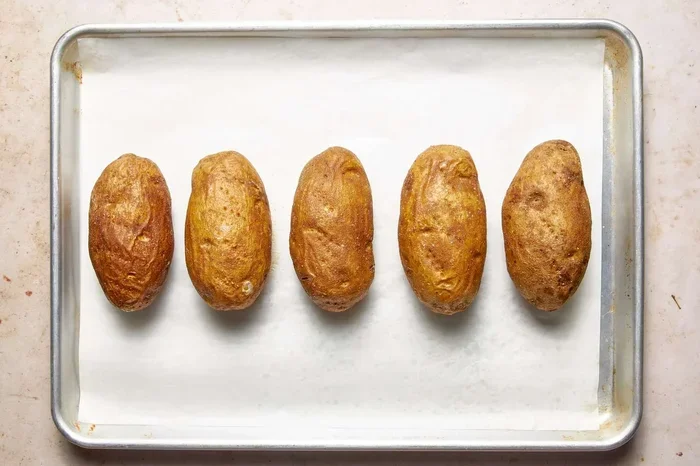
Place the potatoes directly on a baking sheet. Leave space between each potato. Air needs to flow around them for even cooking. If you crowd them together, they may steam instead of bake.
For extra crispy skin, you can skip the foil. If you prefer softer skin, wrap each potato loosely in aluminum foil. We will talk about the pros and cons of both methods below.
Step 4: Bake and Wait
Place the baking sheet on the middle rack of your oven. Set your timer for 45 minutes. This is the starting point for medium-sized potatoes. Resist the urge to open the door too often. Every time you open it, heat escapes and cooking slows down.
After 45 minutes, check your potatoes. The skin should look golden brown and feel firm. If the potato is not ready, keep baking in 5-minute increments. We will show you exactly how to tell when they are done in the next section.
Step 5: Rest and Serve
Once your potatoes are done, take them out of the oven. Let them rest for about 5 minutes. This allows the inside to settle and become fluffy. Use a fork to gently squeeze the ends. The potato should give easily and feel soft all the way through.
Slice a cross into the top of each potato. Use your fork to fluff the inside. Now add your favorite toppings and enjoy. There is nothing quite like a freshly baked potato.
Tips for Crispy Skin and Fluffy Inside
Getting the perfect balance of crispy skin and fluffy inside takes a little know-how. Here are some tips that separate good baked potatoes from great ones. These small details make a huge difference in the final result.
Use Olive Oil, Not Butter
It might seem logical to brush butter on your potatoes. But butter has a lower smoke point than olive oil. It can burn at 350°F and leave a bitter taste. Olive oil creates a thin, even barrier that crisps the skin beautifully. It also helps the salt stick to the surface.
Do Not Skip the Poking Step
We mentioned this earlier, but it deserves its own spotlight. Poking holes in the potato is not optional. Without them, steam builds up inside. The result can be a potato that bursts open in your oven. A fork makes quick work of this step. Just 8 to 10 holes per potato is enough.
Preheat Your Oven
Always preheat your oven to 350°F before putting the potatoes in. Putting food into a cold oven throws off the cooking time. The potato starts cooking too slowly and can end up unevenly done. Give your oven at least 10 to 15 minutes to reach the right temperature.
Flip the Potatoes Halfway
For even browning, flip your potatoes over at the 25-minute mark. This ensures both sides get equal exposure to heat. Use a spatula to carefully turn them. You will notice a big difference in how evenly they brown.
Try the Convection Setting
If your oven has a convection mode, use it. Convection fans circulate hot air around the food. This cooks potatoes more evenly and often faster. You may need to reduce the time by 5 to 10 minutes. Keep an eye on them the first time you try this method.
Common Mistakes That Ruin Your Potatoes
Even experienced cooks make mistakes when baking potatoes. Knowing what to avoid saves time and frustration. Here are the most common errors and how to fix them.
Using the Wrong Potato Type
Waxy potatoes like red bliss do not bake well. They hold too much moisture and stay waxy inside. Always choose russet potatoes for baking. Their high starch content breaks down into that fluffy texture we all love.
Skipping the Oil and Salt
Baking a plain potato without oil and salt is a missed opportunity. The oil crisps the skin and the salt adds flavor. This is the simplest way to elevate your baked potatoes from boring to delicious.
Overcrowding the Baking Sheet
It is tempting to fit as many potatoes as possible on one sheet. But overcrowding traps steam. Instead of crispy skin, you get soggy skin. Give each potato room to breathe. Use two baking sheets if needed.
Opening the Oven Door Too Often
We know it is tempting to check on your potatoes. But every peek lets heat escape. This extends the cooking time and can lead to uneven results. Trust the timer and wait until the end to check.
Not Checking for Doneness
Every oven is different. Some run hot, others run cool. The best way to know if your potato is done is to test it. A fork should slide in smoothly with no resistance. If it feels hard in the center, keep baking.
How Different Potato Sizes Affect Baking Time
Size is one of the biggest factors in baking time. A small potato and a large potato will not cook the same way. Understanding this helps you plan your meal better. Here is a quick comparison to guide you.
| Potato Size | Weight | Baking Time at 350°F | Best For |
|---|---|---|---|
| Small | 3-5 oz | 30-40 minutes | Individual servings, potato wedges |
| Medium | 6-8 oz | 45-55 minutes | Classic baked potato |
| Large | 9-12 oz | 55-70 minutes | Loaded baked potatoes |
| Extra Large | 13+ oz | 70-80 minutes | Sharing size or meal prep |
These times assume a standard oven temperature of 350°F. If your potato is especially dense or irregularly shaped, add a few extra minutes. Always test with a fork before serving.
If you are baking potato wedges, the time is shorter. Wedges cook faster because of their smaller size and increased surface area. Wedges at 350°F typically take 25 to 35 minutes. Flip them halfway through for even browning.
Quick Tips for Perfect Timing
- Set a timer for 45 minutes as your starting point for medium potatoes.
- Use a food thermometer if you want precise results. The internal temperature should reach 210°F.
- Rotate the baking sheet halfway through for even cooking.
- Let potatoes rest for 5 minutes after removing from the oven.
- Adjust time based on altitude. Higher altitudes may require a few extra minutes.
Expert Insights on Baking Potatoes
We asked a few experienced home cooks and chefs about their secrets for the best baked potatoes. Here is what they shared. These insights come from years of trial and error. They can help you level up your potato game.
Soak your potatoes in cold water for 30 minutes before baking. This removes excess starch from the surface. The result is crispier skin. It is a simple trick that makes a noticeable difference.
Add a pinch of baking soda to the water when soaking. This raises the pH level and helps the skin crisp up even more. It is a technique used by professional kitchens. Try it once and you will see the difference.
Never wrap potatoes tightly in foil. Tight foil traps too much steam. The skin becomes soft instead of crispy. If you want to use foil, wrap it loosely. Or better yet, skip it entirely for the crispiest results.
Let your potatoes come to room temperature before baking. Cold potatoes straight from the fridge cook unevenly. Taking the chill off helps them bake more consistently. About 15 to 20 minutes on the counter is enough.
Season after baking if you prefer. Some people like to add salt after the potato comes out of the oven. This prevents the salt from drawing out moisture during baking. The skin stays drier and crispier. Experiment with both methods to find your favorite.
Serving Ideas and Toppings
Once your baked potatoes are done, the fun part is the toppings. Here are some ideas to get you started:
- Classic: Butter, sour cream, shredded cheese, and chives
- Loaded: Bacon bits, jalapeños, and ranch dressing
- Healthy: Steamed broccoli, olive oil, and a sprinkle of parmesan
- Comfort food: Pulled pork, BBQ sauce, and coleslaw
- Simple: A drizzle of olive oil and flaky sea salt
The possibilities are truly endless. Baked potatoes are versatile enough to work with almost any flavor profile. They make a great side dish or a satisfying meal on their own.
How to Store and Reheat Leftover Baked Potatoes
If you have leftovers, store them properly to maintain quality. Let the potatoes cool completely before refrigerating. Place them in an airtight container. They will keep in the fridge for up to 5 days.
To reheat, wrap the potato in a damp paper towel and microwave for 2 to 3 minutes. Alternatively, you can reheat in the oven at 350°F for about 10 to 15 minutes. The oven method gives you crispier skin again. Avoid reheating in foil. It makes the skin soggy.
Do not freeze baked potatoes if you can avoid it. The texture changes significantly after freezing. The inside can become grainy and watery. If you must freeze, wrap tightly in plastic wrap and foil. Reheat slowly in the oven at 300°F.
Conclusion
Now you know exactly how long to bake potatoes at 350 in the oven. The answer is 45 to 60 minutes for most potatoes, but the details make all the difference. From choosing the right potato to flipping halfway through, every step matters. Follow the tips in this guide and you will get perfectly baked potatoes every single time.
Baking potatoes at 350°F is simple, reliable, and delicious. It is one of the easiest ways to prepare this classic comfort food. With the right oven temperature and a little patience, you can create restaurant-quality baked potatoes in your own kitchen. So preheat your oven, grab some russets, and give it a try. Your taste buds will thank you.
Remember the key points. Oil and salt the skin. Poke holes before baking. Do not open the oven too often. And always check for doneness with a fork. These small habits add up to big results. Happy baking!
Frequently Asked Questions
Can I bake potatoes at 350°F in a toaster oven?
Yes, you can bake potatoes in a toaster oven at 350°F. However, toaster ovens are smaller and may heat differently. Reduce the baking time by about 10 to 15 minutes. Keep an eye on the potatoes and check for doneness with a fork. The smaller space can actually help create crispier skin.
Should I wrap potatoes in foil when baking at 350°F?
Wrapping in foil is optional. Foil traps steam and creates softer skin. If you prefer crispy skin, skip the foil and place potatoes directly on the baking sheet. Many chefs recommend skipping foil for the best texture. Try both methods and see which you prefer.
How do I know when a baked potato is done?
A baked potato is done when a fork slides in smoothly with no resistance. The skin should be golden brown and firm. You can also gently squeeze the ends. The potato should give slightly without feeling hard in the center. Internal temperature should reach about 210°F.
Can I bake potatoes at 350°F ahead of time?
Yes, you can prep potatoes ahead of time. You can oil and season them and store them in the fridge until baking. However, it is best to bake them fresh for the crispiest skin. If you must bake ahead, reheat in the oven at 350°F for 10 to 15 minutes.
Why did my baked potato come out hard in the middle?
A hard center usually means the potato was not baked long enough. Large potatoes need more time than small ones. Make sure your oven temperature is accurate with an oven thermometer. Also, ensure the potato is fully cooked by testing with a fork before serving.
What is the best potato for baking at 350°F?
Russet potatoes are the best choice for baking at 350°F. They have high starch content and thick skin. This combination creates a fluffy inside and crispy outside. Yukon Gold potatoes work too but produce a creamier, less crispy result. Avoid waxy potatoes like red bliss for baking.