Can You Leave A Thermometer In The Oven And What Happens
Leaving a thermometer in the oven depends entirely on the type you use. Standard digital and mercury thermometers can break, leak, or give false readings when exposed to high heat. Only oven-safe thermometers designed for high temperatures can stay inside during cooking. This guide covers what happens, which types work, and how to avoid costly mistakes.
Have you ever wondered can you leave a thermometer in the oven while your roast cooks? Maybe you popped it in there and forgot about it. Or perhaps you are planning a big meal and want to know if you can just leave the probe in the whole time. Either way, this question comes up a lot in kitchens across the country. The answer is not as simple as yes or no. It depends on the type of thermometer you are using, the temperature inside your oven, and what you want to avoid. This article breaks it all down in plain language so you never have to guess again.
Cooking with the right tools makes a huge difference. A cooking thermometer helps you serve food that is both delicious and safe. But using the wrong one in the wrong place can cause real problems. Broken glass. Contaminated food. Inaccurate temperature readings that lead to overcooked or undercooked meals. We will walk through exactly what happens when different types of thermometers meet high heat. You will learn which ones can stay in the oven, which ones cannot, and how to choose the right one for your kitchen. Let us get started.
Key Takeaways
- Not all thermometers are oven-safe: Regular digital and mercury thermometers can break or malfunction at high temperatures.
- Oven-safe thermometers exist for a reason: They are built with heat-resistant materials that withstand temperatures up to 500°F or more.
- Leaving the wrong thermometer in the oven can damage your food: Chemical leaks or broken glass can contaminate your meal.
- Dial and bimetallic thermometers are great oven options: They are designed to stay inside during long cooking sessions.
- Always check the manufacturer’s temperature limit: Every thermometer has a maximum heat rating printed on the packaging or dial.
- Calibration matters for accuracy: An uncalibrated thermometer can give wrong readings even if it is oven-safe.
- Quick-read thermometers should never stay in the oven: They are meant for instant checks, not prolonged exposure to heat.
📑 Table of Contents
- What Happens When You Leave a Thermometer in the Oven
- Types of Thermometers Safe for Oven Use
- Best Practices for Using a Thermometer in the Oven
- Common Mistakes People Make with Oven Thermometers
- How to Choose the Right Oven Thermometer
- Expert Tips for Accurate Temperature Reading in the Oven
- Frequently Asked Questions
- Conclusion
What Happens When You Leave a Thermometer in the Oven
The answer to this question changes completely based on the thermometer type. Some survive just fine. Others shatter, leak, or fail silently. Understanding what can go wrong helps you make smarter choices every time you cook.
Digital Thermometers and High Heat
Most digital thermometers have electronic components that cannot handle extreme oven temperature. The heat can melt the plastic housing, damage the sensor, or fry the circuit board inside. Even if the thermometer looks fine on the outside, the internal electronics may be compromised. This means your readings become unreliable. You might think your chicken is fully cooked when it is not. That is a serious food safety risk.
Some digital thermometers come with a heat-resistant wire that extends into the oven. These are designed for roasting temperature monitoring. But the display unit must always stay outside the oven. Leaving the whole digital unit inside will almost certainly destroy it.
Mercury Thermometers and Oven Heat
Older mercury thermometers are absolutely not oven-safe. The glass can crack under high heat. Mercury is a toxic liquid metal. If a mercury thermometer breaks inside your oven, you have a hazardous mess to clean up. The mercury can also contaminate your food. This is a health risk you should never take. Never put a mercury thermometer in the oven. If you still have one in your kitchen, consider replacing it with a safer alternative.
Glass Thermometers and Thermal Shock
Standard glass thermometers are not built for rapid temperature changes. When you place a cold glass thermometer into a hot oven, the glass can crack or shatter. This is called thermal shock. Even if the thermometer survives the first few minutes, prolonged exposure to high heat weakens the glass over time. A cracked thermometer is a safety hazard and a waste of money.
Types of Thermometers Safe for Oven Use
Not all thermometers are created equal. Some are specifically designed to handle the intense heat inside an oven. Knowing which ones are safe helps you cook with confidence and protect your food.
Dial Thermometers
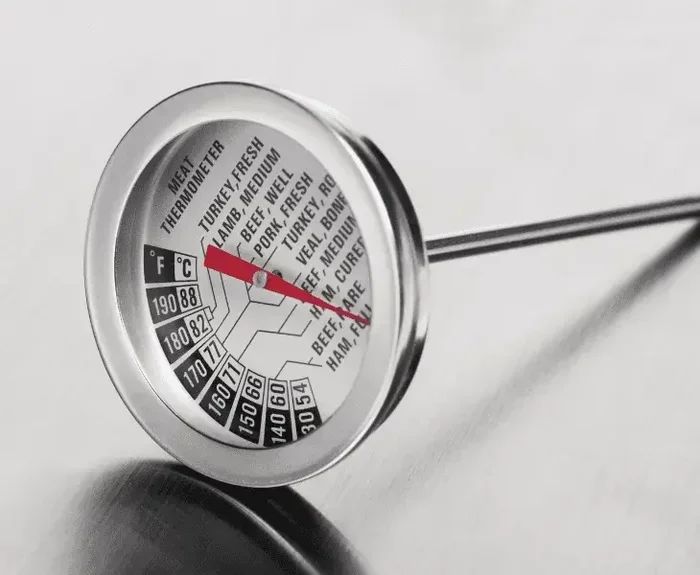
Dial thermometers, also called bimetallic thermometers, are among the most popular oven-safe options. They use two different metals bonded together that expand at different rates when heated. This expansion moves the needle on the dial face. You can leave a dial thermometer in the oven for the entire cooking process. They are perfect for roasts, whole chickens, and large cuts of meat.
Look for a dial thermometer with a long probe. The sensing area should be at least two inches long for accurate readings. Many quality dial thermometers can handle temperatures up to 400°F or 500°F. Always check the heat resistance rating before using one in a hot oven.
Oven-Safe Probe Thermometers
Probe thermometers are built for slow cooking and smoking. They feature a metal probe that stays in the food while the oven or smoker runs. The probe connects to a digital display unit that sits outside the oven. This design gives you real-time internal temperature readings without opening the door and losing heat.
Many pitmasters and home cooks love probe thermometers for low-and-slow cooking. They are ideal for brisket, pork shoulder, and ribs. The wire connecting the probe to the display is usually heat-resistant up to 300°F or higher. Just make sure the display unit stays well away from direct heat.
Bimetallic Oven Thermometers
These are standalone thermometers designed to hang inside the oven. They measure the oven’s ambient baking temperature rather than the food’s internal temperature. You can leave them on a oven rack or hang them from a hook. They help you verify that your oven is actually reaching the temperature you set.
Many ovens have inaccurate built-in thermostats. A bimetallic oven thermometer lets you double-check the real temperature inside. This is especially useful when baking bread or pastries where precision matters. They are affordable and easy to use.
Instant-Read Thermometers
Instant-read thermometers are not designed for oven use. They are meant for quick temperature checks during cooking. You insert the probe, wait a few seconds, read the number, and pull it out. Leaving an instant-read thermometer in the oven will damage it quickly.
Some models can withstand brief exposure to moderate heat. But they should never be left inside a hot oven unattended. Treat them as quick-check tools only. If you need continuous monitoring, choose a probe or dial thermometer instead.
Best Practices for Using a Thermometer in the Oven
Using a thermometer correctly in the oven ensures accurate readings and long-lasting performance. Follow these guidelines to get the best results every time.
Check the Manufacturer’s Temperature Limit
Every thermometer comes with a maximum temperature rating. This information is usually printed on the packaging, the dial face, or the product manual. Before placing any thermometer in the oven, find this number. If your oven runs hotter than the thermometer’s limit, do not use it.
For example, if a thermometer is rated for 350°F and you are roasting at 450°F, that thermometer will likely fail. Knowing the limit prevents accidents and keeps your food safe.
Position the Probe Correctly
Where you place the probe matters a lot. For meat, insert the probe into the thickest part of the cut. Avoid touching bone, fat, or gristle. These areas conduct heat differently and can give false readings.
For oven ambient temperature, place a standalone thermometer in the center of the oven. Keep it away from the walls and heating elements. This gives you the most accurate reading of the actual cooking environment.
Never Leave a Non-Oven-Safe Thermometer Inside
This sounds obvious, but it happens more often than you might think. Someone sets a timer, walks away, and forgets about the thermometer. If it is not oven-safe, the consequences can be messy and dangerous. Always double-check before closing the oven door.
If you are unsure whether your thermometer can handle oven heat, err on the side of caution. Take it out before cooking. It is better to be safe than to deal with a broken thermometer or contaminated food.
Calibrate Your Thermometer Regularly
Even oven-safe thermometers can lose accuracy over time. Temperature changes, drops, and general wear affect calibration. Testing your thermometer regularly ensures you can trust the readings.
The easiest way to calibrate is the ice water test. Fill a glass with ice and add cold water. Stir for a minute and insert the probe. It should read 32°F or very close. If it does not, adjust the calibration nut on the dial or replace the thermometer. For oven use, you can also test it in boiling water (212°F at sea level) to check high-temperature accuracy.
Use Oven Mitts When Handling Hot Thermometers
A thermometer left in the oven becomes extremely hot. Always use oven mitts or heat-resistant gloves when removing it. A hot probe can cause painful burns. Keep a hand towel or mitt near the oven at all times when cooking with thermometers.
Common Mistakes People Make with Oven Thermometers
Even experienced cooks make mistakes when using thermometers in the oven. Learning from these errors helps you avoid them and cook more safely.
Assuming All Thermometers Are Oven-Safe
This is the number one mistake. People see a thermometer, assume it can handle heat, and toss it in the oven. The reality is that many thermometers are only designed for water, food surfaces, or brief contact with heat. Always read the label and instructions before using any thermometer in the oven.
Ignoring the Temperature Limit
Some oven-safe thermometers have lower limits than others. Using a thermometer rated for 350°F in a 500°F oven will damage it. The probe may warp, the dial may become inaccurate, or the glass may crack. Respect the temperature limit and choose a thermometer rated for your typical cooking temperatures.
Not Cleaning the Thermometer Between Uses
After removing a thermometer from the oven, clean it before storing it. Food residue can build up on the probe and harbor bacteria. Use warm soapy water and a soft cloth. For probe thermometers, wipe the wire and connector as well. Keeping your thermometer clean extends its life and keeps your food safe.
Relying Solely on the Oven Dial
Many people trust their oven’s built-in temperature display completely. The truth is that most oven dials are not very accurate. They can be off by 25°F or more. An independent oven thermometer takes the guesswork out of baking temperature control. It is a small investment that pays off in better cooking results.
How to Choose the Right Oven Thermometer
Choosing the right thermometer for oven use depends on what you cook most often. Different thermometers serve different purposes. Here is what to consider before buying.
Consider Your Cooking Style
If you roast large cuts of meat regularly, a dial thermometer with a long probe is your best bet. It stays in the food for the entire cook and gives you a steady reading. If you bake bread or pastries, a standalone oven thermometer helps you monitor the ambient heat accurately.
For smoking and low-and-slow cooking, a wireless probe thermometer is the top choice. It lets you monitor the temperature from across the room. Some models connect to smartphone apps so you can track progress in real time.
Look for Heat-Resistant Materials
The best oven thermometers use stainless steel probes, heat-resistant glass, and durable metal components. Avoid thermometers with plastic parts near the sensing area. These will melt or warp in high heat. Check the product description for details about materials and heat tolerance.
Read Reviews and Check Ratings
Before buying any thermometer, read customer reviews. Look for feedback about accuracy, durability, and ease of use. A thermometer that works well at moderate temperatures may fail at high heat. Reviews from other cooks give you real-world insights that product descriptions sometimes miss.
Test the Thermometer After Purchase
Once you buy a new thermometer, test it before relying on it for important meals. Use the ice water test and the boiling water test. This confirms the thermometer is accurate and ready for oven use. Testing takes just a couple of minutes and can save you from a ruined dinner.
Expert Tips for Accurate Temperature Reading in the Oven
Getting the most out of your oven thermometer comes down to a few simple habits. These tips from experienced cooks and food safety experts will help you achieve perfect results every time.
First, place your thermometer in the center of the oven. The edges are closer to the heating elements and tend to run hotter or cooler than the middle. The center gives you the most representative reading of your actual cooking environment.
Second, avoid opening the oven door just to check the temperature. Every time you open the door, you lose heat and extend cooking time. If you are using a probe thermometer with an external display, you can check the temperature from a distance without disturbing the oven environment.
Third, let your thermometer adjust to the oven temperature gradually. If you place a cold thermometer into a preheated oven, the sudden heat can stress the components. Give it a minute or two to warm up if possible. This small step extends the life of your thermometer and improves accuracy.
Fourth, replace your thermometer if it starts giving inconsistent readings. Thermometers are not meant to last forever. A thermometer that reads 10 degrees off can mean the difference between a perfectly cooked roast and a dry, overcooked one. Treat it as a kitchen tool that needs occasional replacement, just like your cutting boards or spatulas.
Frequently Asked Questions
Can you leave a meat thermometer in the oven while it cooks?
Yes, but only if it is an oven-safe meat thermometer. Dial thermometers and probe thermometers designed for oven use can stay inside during the entire cooking process. Instant-read and digital meat thermometers should be removed before the oven is turned on. Always check the manufacturer’s guidelines before leaving any thermometer in a hot oven.
What temperature can a thermometer withstand in the oven?
It depends on the type. Oven-safe dial thermometers typically handle up to 400°F to 500°F. Probe thermometers can withstand similar ranges. Standard digital and instant-read thermometers usually cannot handle anything above 200°F. Always check the temperature rating on the packaging or product description before using it in the oven.
What happens if you leave a regular thermometer in the oven?
Leaving a non-oven-safe thermometer in the oven can cause it to break, leak, or give inaccurate readings. Glass thermometers may crack from thermal shock. Digital thermometers can damage their internal electronics. Mercury thermometers are especially dangerous because the mercury is toxic if released. Always remove regular thermometers before turning on the oven.
Are wireless probe thermometers safe to leave in the oven?
Yes, wireless probe thermometers are designed to stay in the oven during cooking. The probe itself is heat-resistant and built for long-term exposure. The wireless receiver or app connects to the probe from outside the oven. Just make sure the receiver stays away from direct heat and moisture. These thermometers are excellent for monitoring roasts, smoked meats, and slow-cooked dishes.
How do I know if my thermometer is oven-safe?
Check the packaging, the product manual, or the dial face for a temperature rating. Oven-safe thermometers will clearly state they can handle oven temperatures. Look for terms like “oven-safe,” “heat-resistant,” or a specific maximum temperature. If there is no information, do not assume it is safe. Contact the manufacturer or choose a different thermometer.
Can I use a candy thermometer in the oven?
Most candy thermometers are not designed for oven use. They are built for stovetop cooking and typically cannot handle the sustained high heat of an oven. The glass and mounting clip are not made for prolonged exposure to dry oven heat. Stick to thermometers specifically labeled as oven-safe for baking and roasting tasks.
Conclusion
The question can you leave a thermometer in the oven does not have a one-size-fits-all answer. It depends on the type of thermometer, its heat rating, and how you use it. Dial thermometers and oven-safe probe thermometers are built to stay inside during cooking. Instant-read and digital thermometers should always be removed before the oven heats up. Mercury and standard glass thermometers should never enter the oven at all.
By following the tips and guidelines in this article, you can cook with confidence and keep your food safe. Always check the manufacturer’s temperature limit, calibrate your thermometer regularly, and position the probe correctly for the most accurate readings. A good oven thermometer is one of the most valuable tools in any kitchen. Choose the right one, use it properly, and enjoy perfectly cooked meals every single time.