How To Get Grease Out Of Oven Bottom The Easy Way
Getting grease out of your oven bottom doesn’t have to be a nightmare. Whether you deal with fresh splatters or baked-on grime, this guide walks you through easy, proven methods using household items and professional-grade cleaners. You’ll learn safe techniques, natural solutions, and smart habits that keep your oven sparkling clean every time.
There’s nothing worse than opening your oven and seeing a thick layer of grease on the oven bottom. It smells bad, it looks terrible, and it can even affect how your food cooks. But here’s the good news: getting grease out of oven bottom is way easier than most people think.
You don’t need expensive products or a degree in chemistry. With the right approach and a little elbow grease (pun intended), you can have your oven looking brand new. This guide covers every method you need, from simple household hacks to stronger cleaning solutions for really tough messes.
Whether your oven has a light film of grease or a crusty layer of baked-on grease, you’ll find the right approach here. Let’s dive in and get your oven clean.
Key Takeaways
- Baking soda and vinegar are your best friends when tackling oven grease naturally and affordably.
- Soaking and patience make even the toughest baked-on grease easy to wipe away.
- Regular maintenance prevents heavy grease buildup and saves you from deep cleaning sessions.
- Avoid harsh chemicals on self-cleaning ovens to protect the interior coating and heating elements.
- Heat and steam help loosen grease before you even start scrubbing.
- Store-bought oven cleaners work fast but require proper ventilation and safety precautions.
- A damp cloth after every use keeps your oven bottom in great shape between deep cleans.
📑 Table of Contents
- Why Grease Builds Up on Your Oven Bottom
- What You Need Before You Start Cleaning
- Step-by-Step Method to Get Grease Out of Oven Bottom
- Natural and Homemade Cleaners for Oven Grease
- Dealing with Stubborn Baked-On Grease
- Preventing Grease Buildup in Your Oven
- Common Mistakes People Make When Cleaning Oven Grease
- Expert Insights on Keeping Your Oven Grease-Free
- Comparison: Homemade vs. Store-Bought Oven Cleaners
- Final Thoughts: Keeping Your Oven Clean Is Easier Than You Think
Why Grease Builds Up on Your Oven Bottom
Understanding why grease accumulates helps you prevent it in the future. Every time you cook, fats and oils from your food splatter and drip to the bottom of the oven. Over time, these droplets heat up, cool down, and harden into a stubborn layer of oven grease buildup.
Several factors speed up this process:
- High-temperature cooking causes oils to splatter more aggressively.
- Frequent roasting or frying adds more fat to the oven interior.
- Not using a baking sheet or foil catches drips before they reach the bottom.
- Infrequent cleaning lets layers stack up and bake on harder.
- Older ovens may have more textured surfaces where grease clings.
The good thing is that fresh grease wipes off easily. The real challenge starts when that grease bakes on through repeated heating cycles. That’s when you need the stronger methods covered later in this guide.
What You Need Before You Start Cleaning
Before you dive into any cleaning method, gather your supplies. Having everything ready makes the process smoother and faster. Here’s what you’ll need for most oven cleaning methods:
Basic Supplies for Light Grease
- Warm water
- Dish soap (a mild one works great)
- Soft sponge or cloth
- Baking soda
- White vinegar
- Spray bottle
- Rubber gloves
Supplies for Heavy or Baked-On Grease
- Commercial oven degreaser spray
- Hydrogen peroxide (3% solution)
- Cream of tartar
- Plastic scraper or spatula
- Old toothbrush for corners
- Microfiber cloths
- Dish towel for drying
Always wear rubber gloves to protect your hands. Even gentle cleaners can dry out your skin with prolonged contact. And if you use a commercial grease removal spray, make sure your kitchen is well-ventilated by opening windows or turning on a fan.
Step-by-Step Method to Get Grease Out of Oven Bottom
This is the core method that works for most situations. It uses simple ingredients and requires no special tools. Follow these steps carefully for the best results.
Step 1: Remove the Oven Racks
Take out the oven racks and any other removable parts. This gives you full access to the oven bottom and makes it easier to clean every corner. You can clean the racks separately using the same methods.
Step 2: Loosen the Grease with Heat and Steam
Place a heat-safe bowl filled with water on the lower rack. Set your oven to 250°F and let it run for about 10 to 15 minutes. The steam helps soften the baked-on grease, making it much easier to wipe away later.
Don’t skip this step. Many people jump straight to scrubbing, which takes far more effort. The steam does half the work for you.
Step 3: Make a Baking Soda Paste
While the oven steams, mix about half a cup of baking soda with a few tablespoons of water. Stir it until it forms a thick paste. The consistency should be similar to toothpaste — not too runny, not too dry.
This baking soda paste is a gentle but effective oven bottom cleaner. It cuts through grease without scratching the surface.
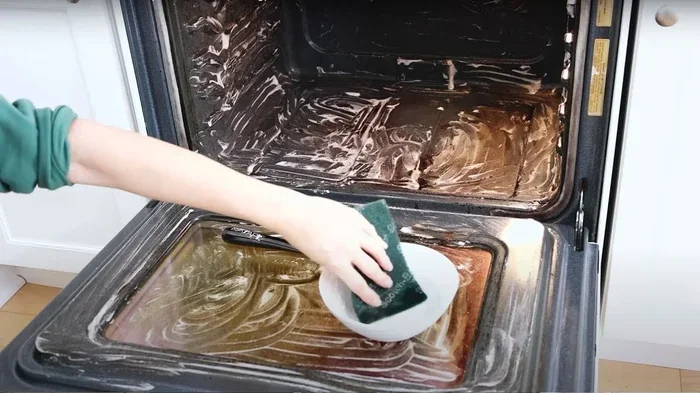
Step 4: Apply the Paste Generously
Spread the baking soda paste all over the greasy areas of the oven bottom. Focus on the thickest grease spots but cover the entire surface. Let it sit for at least 30 minutes. For really bad buildup, leave it overnight.
The paste works by breaking down the grease stain removal process at a molecular level. It’s slow but very effective.
Step 5: Wipe and Spray with Vinegar
After the paste has had time to work, use a damp cloth to wipe away the baking soda. You’ll see the grease coming off with it. Then, spray white vinegar over any remaining baking soda residue. It will fizz — that’s the reaction doing its final cleaning work.
Wipe everything clean with a fresh damp cloth. You should see a noticeable difference right away.
Step 6: Dry and Replace the Racks
Use a dry towel to wipe the oven bottom completely. Replace the clean oven racks. Your oven is now free of surface and mid-level grease.
Natural and Homemade Cleaners for Oven Grease
Many people prefer natural oven cleaning methods because they’re safe, affordable, and free of harsh chemicals. Here are the best homemade options that actually work.
Baking Soda and Vinegar Solution
This is the most popular homemade oven cleaner for a reason. It’s cheap, non-toxic, and effective on most grease levels. Mix baking soda with water into a paste, apply it, let it sit, then spray vinegar and wipe clean. We covered this in detail above.
Hydrogen Peroxide and Baking Soda
For slightly tougher grease, combine three tablespoons of baking soda with two tablespoons of hydrogen peroxide. Apply the mixture to the greasy areas and let it sit for 20 to 30 minutes. Wipe clean with a damp cloth. The hydrogen peroxide adds a mild bleaching and degreasing action that regular baking soda alone doesn’t have.
Lemon and Water Steam Clean
Cut two lemons in half and squeeze the juice into a bowl of water. Place the bowl in the oven and heat it at 250°F for 15 minutes. The citric acid in lemon juice helps cut through light grease and leaves a fresh scent behind. This method works best as a maintenance clean rather than for heavy buildup.
Dish Soap and Warm Water Soak
For removable oven parts like racks and trays, fill a bathtub or large sink with warm water and add several drops of dish soap. Let the parts soak for a few hours. The grease will soften enough to scrub off with a non-abrasive sponge.
Dealing with Stubborn Baked-On Grease
Sometimes the grease has been building up for months, and nothing seems to work. That’s when you need the heavy-duty approach. Here’s how to handle the toughest baked-on grease on oven bottom.
Use a Commercial Oven Cleaner
Store-bought oven degreasers are designed specifically for this job. Look for products that mention baked-on grease on the label. Spray the cleaner evenly over the oven bottom (avoid the heating elements), close the door, and let it sit for the time listed on the product — usually 15 to 30 minutes.
Always follow the manufacturer’s instructions. Wear gloves and work in a ventilated area. These products contain strong chemicals that can irritate your skin and lungs.
The Boiling Water Method
Bring a pot of water to a boil and place it inside the oven on the lowest rack. Close the door and let the steam work for 20 to 30 minutes. The heat and moisture will loosen even the most stubborn grease buildup. Afterward, apply your baking soda paste and wipe everything away.
Plastic Scraper for Thick Crusts
If the grease has formed a thick, hard crust, use a plastic scraper to gently remove the bulk before applying any cleaner. Never use metal scrapers or steel wool. They can scratch the oven’s interior coating and cause more problems down the line.
When to Call a Professional
If you’ve tried everything and the grease still won’t budge, it might be time to call a professional oven cleaning service. This is rare, but it happens — especially with ovens that haven’t been cleaned in years. A professional has industrial-grade tools and cleaners that can handle extreme grease removal cases.
Preventing Grease Buildup in Your Oven
Cleaning is important, but preventing the mess in the first place is even better. These simple habits will keep your oven cleaner for longer and reduce the need for deep oven cleaning sessions.
Use Baking Sheets and Foil
Always place a baking sheet or aluminum foil on the rack below your food. This catches drips before they reach the oven bottom. Just remember to remove the foil after cooking to prevent airflow blockage.
Clean Spills Immediately
When you notice a spill, clean it up as soon as the oven cools down. Fresh grease wipes away with a damp cloth in seconds. Waiting lets it bake on and become a much bigger job later.
Do a Quick Wipe After Every Few Uses
Get in the habit of wiping the oven bottom with a damp cloth after every 3 to 4 cooking sessions. This takes less than two minutes and prevents grease accumulation from reaching problematic levels.
Use the Self-Cleaning Feature Wisely
If you have a self-cleaning oven, use it regularly — about once a month. The high heat burns off grease and food residue. Just make sure your kitchen is ventilated during the process, and let the oven cool completely before wiping out any ash residue.
Common Mistakes People Make When Cleaning Oven Grease
Even with the right products, people often make mistakes that make the job harder or even damage their oven. Here’s what to avoid.
Using Abrasive Scrubbers
Steel wool, abrasive pads, and rough scrub brushes can scratch the oven’s interior coating. Once the coating is damaged, grease sticks more easily and the oven becomes harder to clean over time. Stick with soft sponges and microfiber cloths.
Skipping Ventilation with Chemical Cleaners
Commercial oven cleaners release strong fumes. Using them in a closed kitchen can cause headaches, nausea, and breathing irritation. Always open windows and turn on a fan. Never use them near an open flame.
Not Letting Cleaners Sit Long Enough
Many people apply a cleaner and immediately start wiping. This wastes the product’s effectiveness. Let oven cleaning solutions sit for the recommended time so they can fully break down the grease.
Ignoring the Oven Racks
Cleaning only the oven bottom and ignoring the racks leaves grease and food residue behind. When you cook again, that residue gets onto your food. Always clean racks as part of your oven maintenance routine.
Expert Insights on Keeping Your Oven Grease-Free
Professional cleaners and appliance experts share a few extra tips that make a big difference.
Heat the oven before cleaning. Warming the oven to about 150°F for 5 minutes before applying any cleaner softens the grease and helps the cleaning solution penetrate deeper. This small step saves a lot of scrubbing time.
Test cleaners in a hidden spot first. Especially with commercial products, test them on a small, inconspicuous area of the oven bottom to make sure they don’t cause discoloration or damage.
Don’t mix cleaning products. Mixing vinegar with bleach-based cleaners or combining different commercial products can create dangerous fumes. Always use one cleaner at a time and rinse thoroughly between applications.
Keep a cleaning schedule. Mark your calendar for a deep oven cleaning every 3 to 6 months. Between those sessions, do quick wipes. This routine keeps grease under control and makes each cleaning session much faster.
Use parchment paper. Lining the bottom of your oven with parchment paper (cut to fit, avoiding heating elements) catches drips and makes cleanup effortless. Just replace it when it gets dirty.
Comparison: Homemade vs. Store-Bought Oven Cleaners
Not sure which route to take? Here’s a quick comparison to help you decide.
| Factor | Homemade Cleaners | Store-Bought Cleaners |
|---|---|---|
| Cost | Very low (pennies per use) | Moderate ($5 to $15 per product) |
| Effectiveness on Light Grease | Excellent | Excellent |
| Effectiveness on Heavy Grease | Good (needs more time) | Very good (faster results) |
| Chemical Exposure | None | Moderate to high |
| Time Required | Longer (soaking needed) | Shorter (fast-acting formulas) |
| Safety | Very safe | Requires gloves and ventilation |
| Environmental Impact | Low | Higher (chemical runoff) |
For most households, a combination approach works best. Use homemade cleaners for regular maintenance and light cleaning. Keep a commercial oven degreaser on hand for those really tough jobs that need extra power.
Final Thoughts: Keeping Your Oven Clean Is Easier Than You Think
Getting grease out of oven bottom is a task anyone can handle with the right method and a little patience. Whether you choose a natural approach with baking soda and vinegar or go with a strong commercial cleaner, the key is consistency. Clean regularly, act fast on spills, and your oven will stay in great shape.
Start with the simplest method first. If that doesn’t cut it, move up to the stronger options. You’ll be surprised at how well these techniques work. And once your oven is clean, maintaining it becomes a quick and easy part of your kitchen routine.
Now that you know exactly how to handle oven grease, there’s no reason to let that mess sit another day. Pick your method, gather your supplies, and get started. Your oven — and your kitchen — will thank you for it.
Frequently Asked Questions
What is the easiest way to get grease out of oven bottom?
The easiest method is using a baking soda paste mixed with water. Apply it to the greasy areas, let it sit for at least 30 minutes, then wipe it away with a damp cloth. Follow up with a spray of white vinegar to lift any remaining residue. This natural approach works for most light to moderate grease buildup without any harsh chemicals.
Can I use oven cleaner on the oven bottom if it’s a self-cleaning model?
It’s best to avoid chemical oven cleaners on self-cleaning ovens. The interior coating and heating elements can be damaged by harsh chemicals. Instead, use the self-cleaning cycle regularly and wipe the bottom with a damp cloth after it cools. For stubborn spots, a baking soda paste is a safe alternative that won’t harm the oven’s surfaces.
How often should I clean grease out of my oven bottom?
A quick wipe every few uses keeps grease from building up. A deeper clean with a baking soda paste or natural cleaner should be done every 3 to 6 months, depending on how often you cook. If you notice strong odors or visible grease layers, it’s time for a cleaning session regardless of your schedule.
What removes baked-on grease from the oven bottom the fastest?
A commercial oven degreaser spray works the fastest on baked-on grease. Spray it on, let it sit for 15 to 30 minutes as directed on the label, then wipe clean. For a chemical-free option, combine the boiling water steam method with a baking soda paste. The steam softens the crust, and the paste breaks down the remaining grease for easy removal.
Is it safe to clean oven grease with vinegar and baking soda?
Yes, vinegar and baking soda are completely safe for oven cleaning. They’re non-toxic, affordable, and effective on most grease levels. The vinegar reacts with the baking soda to create a fizzing action that helps lift grease from surfaces. Just avoid using this combination right after a commercial chemical cleaner — always rinse the oven thoroughly first.
Why does my oven bottom keep getting greasy even after cleaning?
This usually happens when you’re not using a drip tray, baking sheet, or foil to catch food drips during cooking. It can also mean you’re cleaning too infrequently, allowing layers to stack up. Make sure to wipe the oven bottom after spills and do a light cleaning every few uses to prevent the same grease from returning.
=== CONCLUSION ===
Getting grease out of oven bottom is a straightforward task when you know the right approach. From simple baking soda pastes to steam cleaning and commercial degreasers, you now have a full toolkit of methods that handle every level of mess. The key is to act early, clean regularly, and choose the method that fits your situation and comfort level.
Start with the gentlest method and work your way up if needed. Your oven will stay clean longer, your kitchen will smell better, and your cooking results will improve. Don’t let grease buildup take over — use these tips today and enjoy a sparkling clean oven tomorrow.