How Long For Filet Mignon In Oven A Perfect Recipe
Learning how long for filet mignon in oven is the key to a restaurant-quality meal at home. This guide covers exact cooking times, temperatures, and seasoning tips for juicy, tender results. Whether you prefer rare or well-done, you will find everything you need to cook the perfect oven-baked filet mignon every single time.
There is something truly special about cooking a perfect filet mignon at home. The tender, buttery texture and rich flavor make it one of the most beloved cuts of beef. But many home cooks wonder exactly how long for filet mignon in oven. The answer depends on a few simple factors like thickness, starting temperature, and your preferred level of doneness. In this guide, we will walk you through every step so you can serve a steak that rivals any upscale restaurant.
Whether you are a beginner in the kitchen or a seasoned home chef, this filet mignon recipe will give you confidence. We cover everything from choosing the right cut to knowing the exact filet mignon cooking time. You will also learn the best seasoning ideas, oven temperatures, and resting techniques. By the end, you will have all the tools to make a perfect oven-baked filet mignon that will impress everyone at your table.
Let us be real for a moment. A great steak does not need to be complicated. You do not need fancy equipment or years of experience. You just need the right information and a little patience. That is exactly what this article delivers. So let us get started and find out how long for filet mignon in oven.
Key Takeaways
- Cooking Time: A 1-inch filet mignon takes about 10 to 15 minutes in a 400°F oven for medium-rare.
- Internal Temperature: Pull your steak at 130°F for medium-rare, 140°F for medium, and 150°F for medium-well.
- Searing Matters: Always sear your filet mignon in a cast iron skillet before putting it in the oven for a beautiful crust.
- Resting Is Essential: Let your steak rest for at least 5 minutes after cooking to lock in the juices.
- Seasoning Simple Works Best: Salt, pepper, garlic, and fresh herbs are all you need for an amazing filet mignon recipe.
- Thickness Changes Everything: Adjust your oven time based on how thick your steak is for the best filet mignon doneness.
📑 Table of Contents
- How Long For Filet Mignon In Oven – The Quick Answer
- Choosing The Right Filet Mignon
- Step-By-Step Oven Filet Mignon Recipe
- Internal Temperatures And Doneness Levels
- Expert Tips For Perfect Filet Mignon Every Time
- Common Mistakes to Avoid When Cooking Filet Mignon
- Best Side Dishes To Serve With Filet Mignon
- How Long For Filet Mignon In Oven – Final Thoughts
How Long For Filet Mignon In Oven – The Quick Answer
The short answer is that a standard 1-inch thick filet mignon cooks in about 10 to 15 minutes in a 400°F oven after searing. A 2-inch thick cut will need closer to 15 to 20 minutes. But these numbers can shift based on your oven, the starting temperature of the steak, and how done you like your meat. The real secret is using a meat thermometer to check the internal temperature rather than relying on the clock alone.
Here is a simple breakdown of filet mignon cooking time by thickness:
- 1-inch thick: 10 to 12 minutes for medium-rare after searing.
- 1.5-inch thick: 12 to 15 minutes for medium-rare after searing.
- 2-inch thick: 15 to 20 minutes for medium-rare after searing.
These times assume you have already seared the steak on the stovetop for about 2 minutes per side. The oven finish is what brings the inside to the right filet mignon temperature without overcooking the outside. This two-step method gives you a gorgeous crust on the outside and a perfectly pink center on the inside.
If you skip the sear and go straight from raw to oven, you will need to add a few extra minutes. However, most chefs agree that searing first produces the best flavor and texture. The Maillard reaction that happens during searing creates those deep, savory flavors that make steak so irresistible.
Choosing The Right Filet Mignon
Before you even think about turning on the oven, you need to pick the right piece of meat. Not all filet mignon steaks are created equal, and your choice will affect everything from cooking time to final flavor. Let us look at what to look for when buying beef tenderloin for oven cooking.
Understanding Thickness and Cut
The thickness of your steak is the single biggest factor in determining how long for filet mignon in oven. A thin steak will cook fast and can easily go from perfect to overdone in seconds. A thicker steak gives you more control and a bigger margin for error. When shopping, look for steaks that are at least 1 inch thick. Two inches is even better if you can find them.
You should also pay attention to the shape. Uniform cuts cook more evenly. Avoid steaks that are thin on one end and thick on the other unless you plan to pound them to an even thickness. A beef tenderloin roast that you cut into steaks at home gives you the most control over thickness and size.
Quality Grades and What They Mean
When it comes to oven-baked filet mignon, the quality of the beef matters. USDA Prime grade has the most marbling, which means more flavor and a more tender result. USDA Choice is a solid second option and is easier to find at most grocery stores. USDA Select works fine but will have less marbling and a milder beef flavor.
For the best results, choose a steak with visible streaks of white fat running through the meat. This marbling melts during cooking and keeps your steak juicy. You do not need the most expensive cut, but avoid anything that looks dry or has little fat. A good filet mignon recipe starts with good meat.
Fresh vs. Frozen Filet Mignon
You can use frozen filet mignon, but you need to thaw it properly. The best method is to place the steak in the refrigerator 24 hours before you plan to cook it. This slow thaw keeps the texture intact and prevents moisture loss. Never thaw a steak on the counter at room temperature. It can lead to uneven thawing and potential food safety issues.
If you are short on time, you can thaw a vacuum-sealed steak in cold water. Change the water every 20 to 30 minutes. This method takes about 1 to 2 hours depending on the thickness. Once thawed, cook the steak within a day or two for the best flavor and safety.
Step-By-Step Oven Filet Mignon Recipe
Now that you know how to choose your steak, let us get into the actual cooking process. This step-by-step filet mignon recipe is simple, reliable, and delivers outstanding results every time. Follow these steps closely and you will have a restaurant-quality meal on your plate in under 30 minutes.
Step 1: Prep the Steak
Remove your filet mignon from the refrigerator about 30 minutes before cooking. Letting it come to room temperature helps it cook more evenly. Cold steaks going straight into a hot oven can have a gray band of meat in the center while the outside is perfectly done.
Pat the steak dry with paper towels. This is a crucial step that many people skip. Dry meat sears better and develops a better crust. Season generously on both sides with kosher salt and freshly cracked black pepper. You can also add garlic powder or a touch of smoked paprika for extra flavor.
Step 2: Sear on the Stovetop
Heat a cast iron skillet over high heat until it is smoking hot. Add a high-smoke-point oil like avocado oil or grapeseed oil. Once the oil shimmers, place the steak in the skillet. Do not move it for about 2 to 3 minutes. You want a deep brown crust to form.
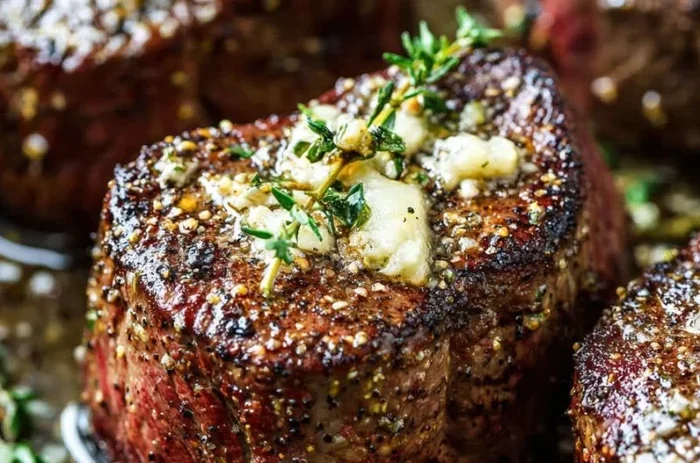
Flip the steak and add a tablespoon of butter, a few crushed garlic cloves, and fresh thyme sprigs to the pan. As the butter melts, tilt the pan and spoon the melted butter over the steak. This butter baste steak technique adds incredible flavor and helps the exterior cook evenly. Sear the second side for another 2 to 3 minutes.
Step 3: Transfer to the Oven
Now it is time for the oven finish. Preheat your oven to 400°F while the skillet is heating. Once both sides are seared, transfer the entire skillet into the oven. This works because a cast iron skillet holds heat well and can go from stovetop to oven safely.
The filet mignon oven time depends on thickness and desired doneness. For a 1-inch steak at 400°F, plan for about 8 to 10 minutes. Use a meat thermometer inserted into the center of the thickest part to check the temperature. This is the most reliable way to know exactly when your steak is done.
Step 4: Rest and Serve
Once the steak reaches your target temperature, remove it from the oven and the skillet. Place it on a cutting board and tent it loosely with aluminum foil. Let it rest for at least 5 minutes. This resting period allows the juices to redistribute throughout the meat. If you cut too soon, the juices will run out and your steak will be dry.
After resting, slice against the grain and serve immediately. A rested filet mignon will be juicy, tender, and full of flavor. This simple oven-baked filet mignon method works beautifully every time.
Internal Temperatures And Doneness Levels
Knowing the right internal temperature filet mignon is the most important skill for cooking steak. The difference between a perfect medium-rare and an overcooked well-done steak often comes down to just a few degrees. Let us break down the steak doneness levels so you can cook exactly the way you like it.
| Doneness | Pull Temp (°F) | Rested Temp (°F) | Appearance |
|---|---|---|---|
| Rare | 120°F | 125°F | Cool red center |
| Medium Rare | 130°F | 135°F | Warm red center |
| Medium | 140°F | 145°F | Warm pink center |
| Medium Well | 150°F | 155°F | Slightly pink center |
| Well Done | 160°F | 165°F | Little or no pink |
For the best flavor and texture, most chefs recommend cooking filet mignon to medium-rare or medium. The filet mignon doneness level you choose is entirely personal, but keep in mind that filet mignon has less fat than other steaks. This means it can dry out faster if you cook it too well done.
Remember that the temperature will rise about 5 degrees after you remove the steak from the oven. This is called carryover cooking. So if you pull your steak at 130°F, it will reach 135°F while resting. Always pull the steak a few degrees before your target temperature to account for this rise.
Why Carryover Cooking Matters
Carryover cooking is one of the most overlooked aspects of how long for filet mignon in oven. The residual heat in the steak continues to cook the interior even after it leaves the oven. A thick steak will experience more carryover than a thin one. This is another reason why using a meat thermometer is so important. You can catch the perfect moment to pull the steak and let carryover cooking do the rest.
Expert Tips For Perfect Filet Mignon Every Time
Even with a great recipe, small mistakes can ruin a perfectly good filet mignon. Here are some expert tips that will help you avoid common pitfalls and consistently achieve amazing results.
Use a Meat Thermometer
This cannot be stressed enough. A meat thermometer is the single best tool for cooking steak. Visual cues like color and touch are helpful, but they are not precise. A digital instant-read thermometer takes the guesswork out of cooking and takes your filet mignon temperature game to the next level.
Do Not Skip the Searing Step
Searing does not seal in juices as the old myth suggests. But it does create a flavorful crust through the Maillard reaction. That crust adds depth and complexity to every bite. A filet mignon recipe that skips searing is missing a key layer of flavor.
Let the Steak Rest
Resting is not optional. When you cut into a hot steak immediately, the juices flood out onto the cutting board instead of staying in the meat. Five minutes of resting makes a noticeable difference in juiciness and tenderness. This is a non-negotiable step for the best oven-baked filet mignon.
Season Generously but Early
Salt your steak at least 40 minutes before cooking, or right before cooking. Salting too far in advance without cooking draws out moisture, and then the moisture gets reabsorbed, which can affect the crust. For a simple and effective approach, salt and pepper just before searing for the best filet mignon seasoning results.
Use Cast Iron for Best Results
A cast iron skillet is the best tool for searing steak because it retains heat incredibly well. Stainless steel skillets work too, but non-stick pans are not ideal because they cannot handle the high heat needed for a good sear. If you have a carbon steel skillet, that works great as well.
Common Mistakes to Avoid When Cooking Filet Mignon
Learning what not to do is just as important as learning the right technique. Here are the most common mistakes people make when cooking filet mignon in oven and how to avoid them.
- Starting with a cold steak: This leads to uneven cooking. Always let your steak come to room temperature for about 30 minutes before cooking.
- Not preheating the oven: A cold oven throws off your timing and can result in a steak that is gray and overcooked on the outside.
- Overcooking the steak: Filet mignon is lean and can become dry quickly. Pull it off the heat a few degrees early and let carryover cooking finish the job.
- Cutting too soon: Cutting into the steak right after cooking releases all those precious juices. Be patient and let it rest.
- Using the wrong oil: Oils with low smoke points like extra virgin olive oil will burn at high searing temperatures. Stick with avocado oil, grapeseed oil, or vegetable oil.
- Skipping the thermometer: Guessing the doneness of a steak is a recipe for disappointment. A meat thermometer is inexpensive and eliminates all guesswork.
Best Side Dishes To Serve With Filet Mignon
A great filet mignon recipe deserves the right sides. The rich, buttery flavor of filet mignon pairs beautifully with a variety of accompaniments. Here are some of the best side dishes to round out your meal.
- Roasted asparagus: The earthy flavor of asparagus complements the richness of filet mignon perfectly.
- Creamy mashed potatoes: A classic pairing that soaks up the juices beautifully.
- Garlic butter mushrooms: Sautéed mushrooms with garlic and butter add a savory depth to the plate.
- Crispy roasted potatoes: Seasoned with rosemary and sea salt, these are a crowd favorite.
- Simple green salad: A light salad with a vinaigrette dressing cuts through the richness of the steak.
- Grilled corn on the cob: A summer favorite that pairs wonderfully with beef tenderloin oven recipes.
Keep your sides simple so they do not compete with the star of the show. The filet mignon should always be the centerpiece of the plate. A light salad or roasted vegetable is all you need to balance the richness of the steak.
How Long For Filet Mignon In Oven – Final Thoughts
Now you know everything about how long for filet mignon in oven. From choosing the right cut to knowing the exact cooking times and temperatures, you have all the tools to make a perfect steak at home. The key is to take your time, use a meat thermometer, and never skip the resting step.
Remember that practice makes perfect. Every time you cook a filet mignon recipe, you will learn something new about your oven and your preferences. Start with the basics, follow the steps in this guide, and adjust as you go. Soon enough, cooking filet mignon will become second nature to you.
The beauty of this oven-baked filet mignon method is its simplicity. You do not need fancy techniques or expensive equipment. Just a good steak, a hot skillet, a preheated oven, and a reliable thermometer. With these tools and the knowledge you have gained, you can serve a steak that will make everyone at the table smile.
So the next time you are craving a special meal, remember what you have learned here. Pick out a great cut of beef tenderloin, season it well, sear it to perfection, and finish it in the oven. You will be amazed at how easy it is to create a perfect filet mignon in your own kitchen. Enjoy the process, savor the results, and share the meal with people you love.
Frequently Asked Questions
How long should I cook filet mignon in the oven at 400°F?
For a 1-inch thick filet mignon seared first, cook for about 8 to 10 minutes at 400°F for medium-rare. A 2-inch thick steak will need 15 to 20 minutes. Always use a meat thermometer to check for your desired internal temperature. Remember that the temperature will rise a few degrees after you pull the steak from the oven.
What is the best internal temperature for filet mignon?
The best internal temperature for medium-rare filet mignon is 135°F after resting. Pull the steak at 130°F to account for carryover cooking. For medium, aim for 145°F after resting and pull at 140°F. Using a meat thermometer is the most reliable way to get perfect results every time.
Do I need to sear filet mignon before putting it in the oven?
Yes, searing before oven cooking is highly recommended. Searing creates a flavorful crust through the Maillard reaction and adds depth to the overall taste. While you can cook filet mignon entirely in the oven, the sear-and-oven method produces the best texture and flavor. Use a cast iron skillet for the best searing results.
Can I cook frozen filet mignon in the oven?
It is not recommended to cook a frozen filet mignon directly in the oven. The outside will overcook before the inside thaws and reaches the right temperature. Always thaw your steak first in the refrigerator for 24 hours or in cold water for 1 to 2 hours. Once thawed, cook within a day or two for the best flavor and food safety.
How do I know when filet mignon is done?
The only reliable way to know when filet mignon is done is by using a meat thermometer. Check the internal temperature at the thickest part of the steak. Pull it at 130°F for medium-rare, 140°F for medium, and 150°F for medium-well. The steak will continue cooking during the resting period, so factor that into your timing.
What is the best way to season filet mignon for oven cooking?
Keep it simple for the best results. Kosher salt, freshly cracked black pepper, and minced garlic work beautifully. You can also add fresh herbs like thyme or rosemary during the searing step. A touch of smoked paprika adds a nice depth of flavor. Apply the seasoning just before cooking for the best crust and flavor.
=== CONCLUSION ===
Cooking the perfect filet mignon in your oven is easier than you think. With the right filet mignon cooking time, the proper temperature, and a little patience, you can achieve restaurant-quality results in your own kitchen. This filet mignon recipe gives you a clear, simple path to a juicy, tender, and flavorful steak every single time.
Remember the key points: sear first, use a meat thermometer, respect the resting time, and adjust your oven-baked filet mignon timing based on thickness. These small steps make a huge difference in the final result. Whether you are cooking for a special occasion or a quiet weeknight dinner, this method delivers every time.
Now that you know exactly how long for filet mignon in oven, it is time to put this knowledge into action. Grab a great cut of beef tenderloin, fire up your oven, and enjoy the process of creating something truly delicious. Your perfect filet mignon is just one recipe away.